history · sicilian-olive-oil · culture · iblei
The History of Olive Oil in Sicily: from the Earliest Records to Today
Three thousand years in a single drop. The history of Sicilian olive oil through Phoenicians, Greeks, Romans, Arabs, Normans, all the way to today's centuries-old Iblean groves.
Olive oil is not a Sicilian product: it is one of the island's mother tongues. Long before bread wheat, long before wine in amphorae, long before "Sicily" even existed as an idea, the olive tree was already here — carried, cultivated, venerated. Telling the story of Sicilian olive oil means crossing at least three millennia of Mediterranean exchange, from Phoenician Mozia to Imperial Rome, from Arab masserie to today's cold-extraction mills.
In this article we trace that continuous line: what the ancient sources say, what archaeologists have unearthed, how the uses of oil have shifted across centuries, and why an extra virgin from the Iblei carries a heritage few foods in the world can match.
The arrival of the olive: Phoenicians, indigenous peoples, and a plant that changed everything
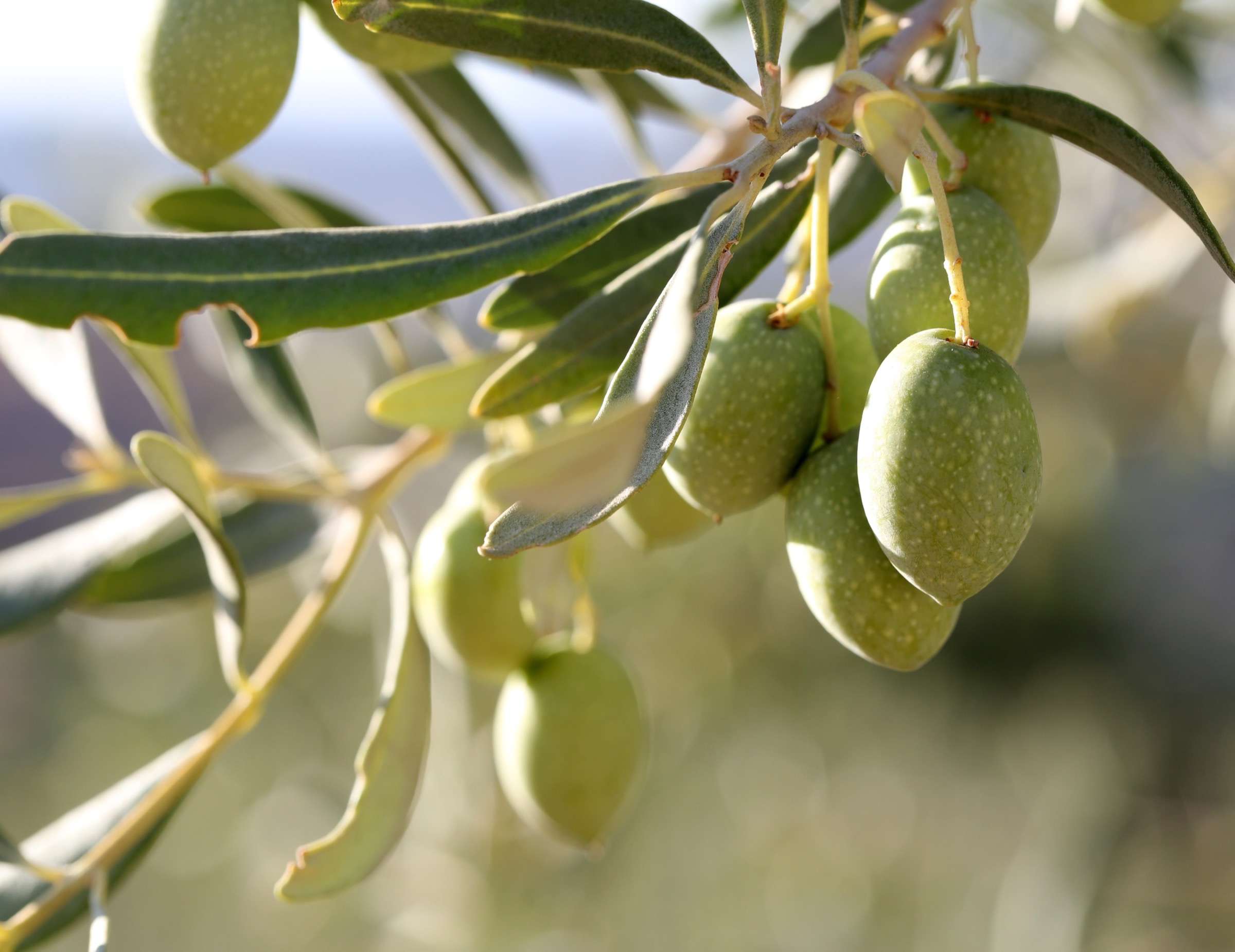
Olea europaea is not native to the western Mediterranean. The most recent archaeobotanical evidence — confirmed by palaeopalynological analyses published in Vegetation History and Archaeobotany — places the domestication of the olive tree in the Near East (the Syro-Palestinian corridor and the eastern Aegean) between the 6th and 4th millennium BCE.
In Sicily the wild olive (oleaster, Olea europaea var. sylvestris) was present long before contact with the eastern Mediterranean. But systematic cultivation arrives with Phoenician trade in the first millennium BCE.
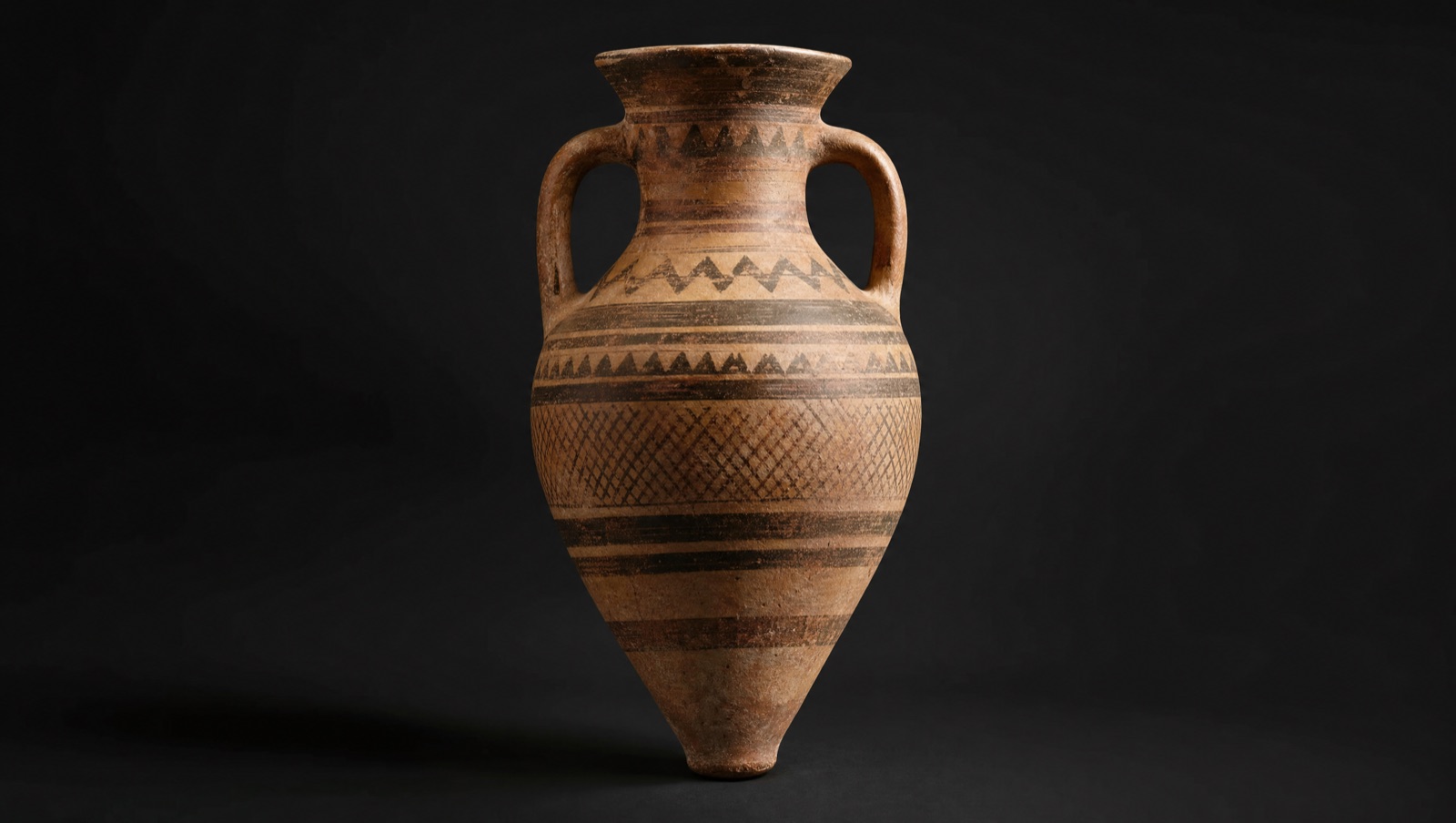
The Phoenicians, navigators from Tyre and Sidon, founded trading posts on Sicily's western coast: Mozia (today San Pantaleo, off Marsala), Solunto, Palermo (Ziz). They brought two technical revolutions: grafting the cultivated olive onto the local oleaster, and standardised commercial amphorae for maritime transport.
Excavations at Mozia (Whitaker, early 20th century; "La Sapienza" University of Rome and the Trapani Superintendency, campaigns 2002–2018) have yielded Sant'Imbenia amphorae and Phoenician-Punic types with oil residues analysed by gas chromatography. It is the oldest oil documented in Sicily from material evidence: 7th–6th century BCE.
What the Phoenicians cultivated
The varieties they introduced were likely ancestors of today's Levantine cultivars. It is plausible — though not genetically proven — that some current Sicilian native cultivars (in particular Tonda Iblea and Moresca) descend from those pre-Greek grafts, evolving in isolation on the Iblean plateau for over twenty-five centuries.
Magna Graecia: the olive enters the polis
From the 8th century BCE Greek colonisation changed everything. Chalcidians, Megarians, and Corinthians founded Naxos (734 BCE), Syracuse (733 BCE), Megara Hyblaea (728 BCE), Gela (688 BCE), Selinunte (628 BCE). With them came new ways of planting, pruning and extracting oil — and above all a new way of thinking about it.
For the Greeks, oil was simultaneously:
- Daily food (alongside bread and wine, the Mediterranean "trinity")
- Cosmetic and cleanser (mixed with ash and a strigil)
- Fuel for lamps
- Medicine (Hippocrates describes 60 therapeutic uses in the Hippocratic Corpus)
- Sacred prize for Olympic victors (olive crowns from the sacred grove at Olympia)
- Ritual offering to the gods and the dead
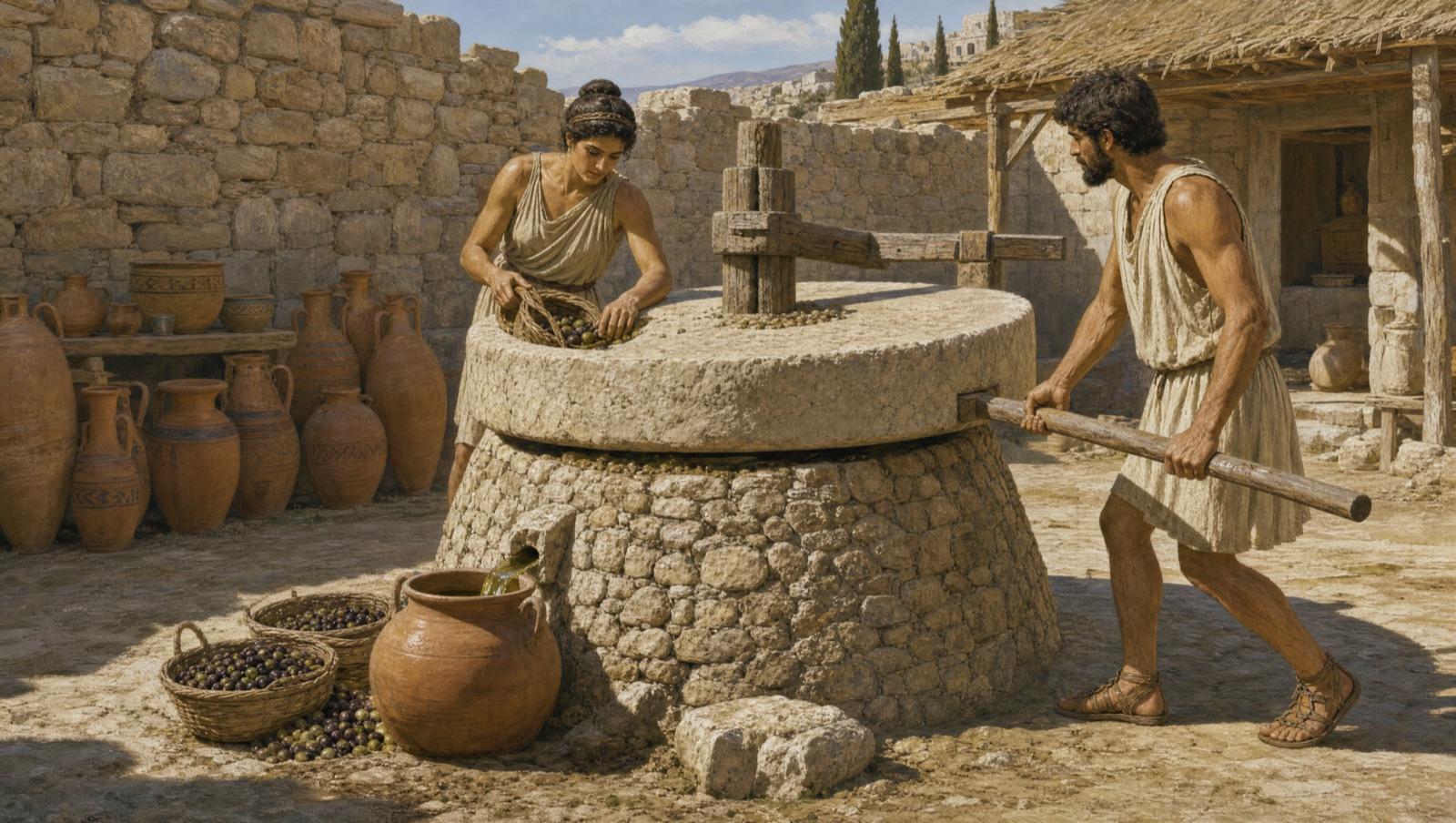
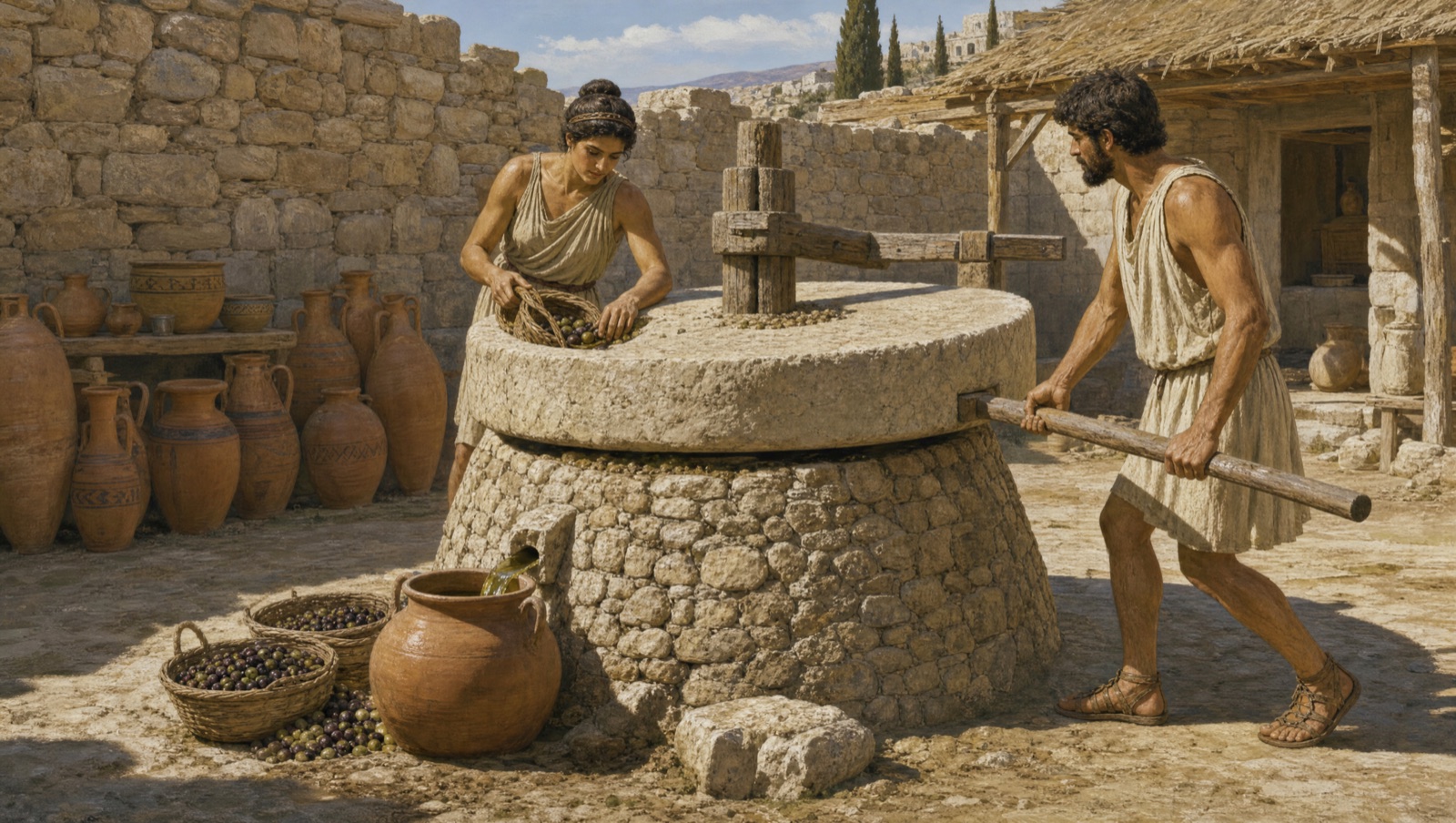
At Megara Hyblaea, in the excavations of the École française de Rome (Vallet, Villard, Auberson, from 1949 onwards), domestic oil mills of the 6th century BCE have come to light, with tholos millstones — the conical pile on which the upper stone rotated. Selinunte has yielded numerous press weights in lava stone and calcarenite.
Thucydides, olive groves, and war
This is not folklore: olive trees enter the earliest military chronicles. Thucydides (History of the Peloponnesian War, book VI) recounts that during the Athenian siege of Syracuse (415–413 BCE) both sides fought over the inland Iblean olive groves for their strategic value — oil for provisioning, wood for palisades, control of the agricultural hinterland. Destroying an olive grove meant wiping out a city's economy for a generation: a new olive tree enters production only after 7–10 years.
Roman Sicily: granary, yes, but also oil-mill of the Empire
With the First Punic War (264–241 BCE) Sicily became the first Roman province. Traditional historiography tells of it as Rome's granary — and it was. But archaeological research of the last twenty years (in particular the Sicily in Transition project of the University of Leicester and the excavations of the Ragusa Superintendency) has shown that olive oil production in Roman Sicily was massive, especially in the Iblei and the Ragusa area.
Cato, Varro, Columella: the manuals
Three Latin agricultural writers document olive cultivation in the Roman world in capillary detail, with practices that applied directly to Sicily:
- Cato the Censor, De agri cultura (2nd c. BCE) — the oldest Latin agronomy manual, with detailed instructions on planting, pruning and milling.
- Varro, Rerum rusticarum libri tres (1st c. BCE) — distinguishes olive varieties by zone and climate.
- Columella, De re rustica (1st c. CE) — devotes the entire book XII to olives, describing the trapeta (screw mills) and the torcular (lever press).
Pliny the Elder (Naturalis Historia, book XV) lists fifteen qualities of oil distinguished by origin: among them, Sicilian oils "subtiles et iucundi" (delicate and pleasing) — words we would use today for a well-made light fruity oil.
The rustic villas of the Iblei
Sicilian Roman archaeology has uncovered dozens of villae rusticae specialised in oil production. The most studied:
- Villa Romana del Casale (Piazza Armerina, 4th c. CE) — famous for the mosaics, but also with production facilities.
- Caucana (Santa Croce Camerina, RG) — a port-emporium for the export of oil and wine to Roman North Africa.
- Kaukana and Anguillara (Ragusa territory) — torcularia (press halls) with dolia of 1,500–3,000 litres.
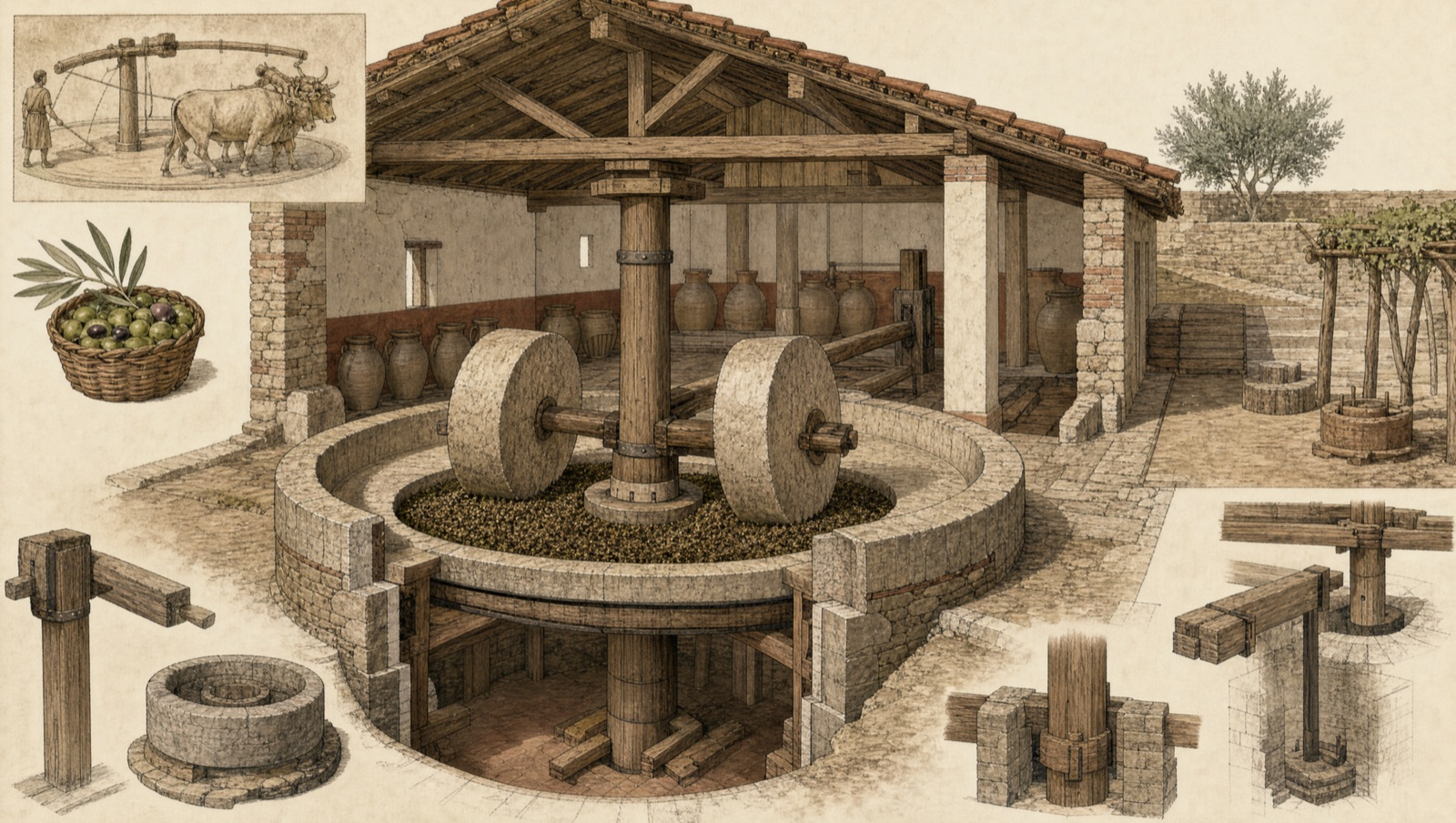
The Roman trapeta — described by Columella and found intact at Pompeii — worked as twin orbes of rotating stone: they crushed the pulp without breaking the pit (something we now know is crucial for quality). The paste was then pressed in the lever or screw torcularia.
The amphorae: imperial logistics
Olive oil transport across the Roman Mediterranean took place almost exclusively in amphorae. The Sicilian type par excellence is the Dressel 21–22 (2nd–3rd c. CE), produced in Ragusan and Syracusan kilns. Fragments of Sicilian amphorae have been found all over the western Mediterranean: at Rome (Monte Testaccio), in Gallia Narbonensis, along the Rhine limes, all the way to Britain.
Iblean oil was already travelling two thousand years ago, and reached Roman soldiers on the Rhine.
Byzantines and Arabs: continuity and revolution
After the crisis of the 3rd century and the collapse of the Western Empire, Sicily became Byzantine (535 CE, Belisarius' reconquest). Olive oil production continued in the same areas, with substantially unchanged techniques.
The Arab revolution (827–1091)
The arrival of the Arabs and Berbers in the 9th century is a general agronomic turning point for Sicily (introduction of citrus, mulberry, sugar cane, rice), but for the olive it meant above all enhanced continuity:
- Widespread diffusion of animal-powered mills
- Irrigation systems that allowed olive groves to expand
- Development of soap-making with second-pressing oil — Palermo became a centre of olive-oil soap production for the entire Mediterranean
- Introduction of the Arabic term al-zayt ("the oil"), surviving in Sicilian dialect
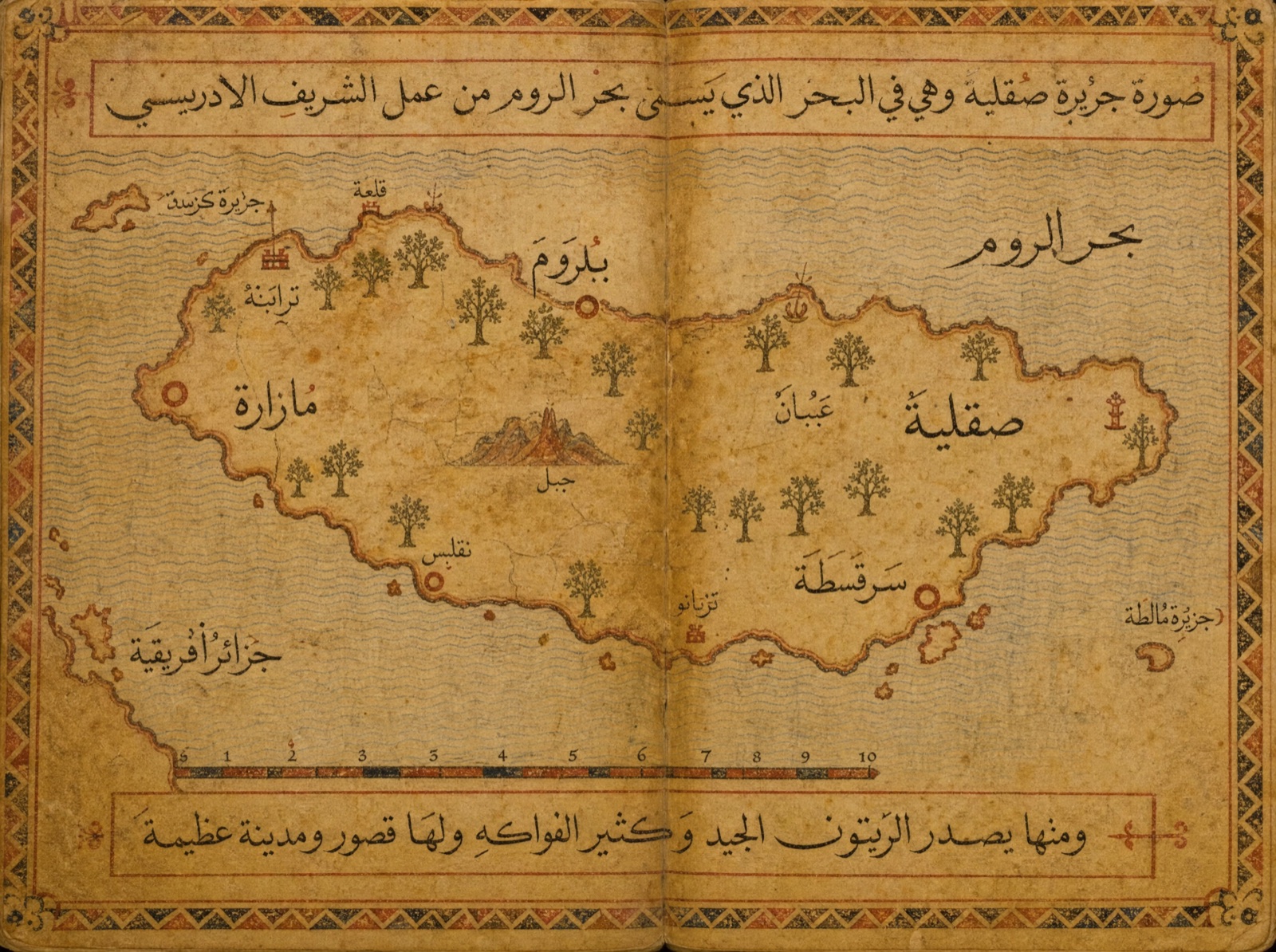
The Arab geographer al-Idrisi, at the Norman court of Roger II (12th c.), in the Book of Roger (1154) describes a Sicily covered in olive groves, particularly in the Mazara, Sciacca and Iblei areas.
Normans, Swabians, Spanish: oil as feudal economy
After the Norman conquest (1061–1091), Sicily became for four centuries a mosaic of olive-growing fiefs. Documents from Benedictine and Basilian monasteries (especially San Nicolò l'Arena of Catania and Monreale) record thousands of transactions of olive-bearing land, with measures still in salme and tumoli, and oil quantities in cafìsi.
The cafìso — a Sicilian oil measure (~ 16 litres, varying by area) — is still used today by old olive growers to estimate the yield of a grove.
Under Spanish rule (1412–1713) Sicily exported oil throughout Europe via the ports of Messina, Palermo, Trapani and Pozzallo. The Catasto onciario of Charles III of Bourbon (18th century) records, for every fief, the number of productive olive trees and the average annual yield. These are the first systematic statistical data on Sicilian oil production.
The 19th century: industrialisation of the mill
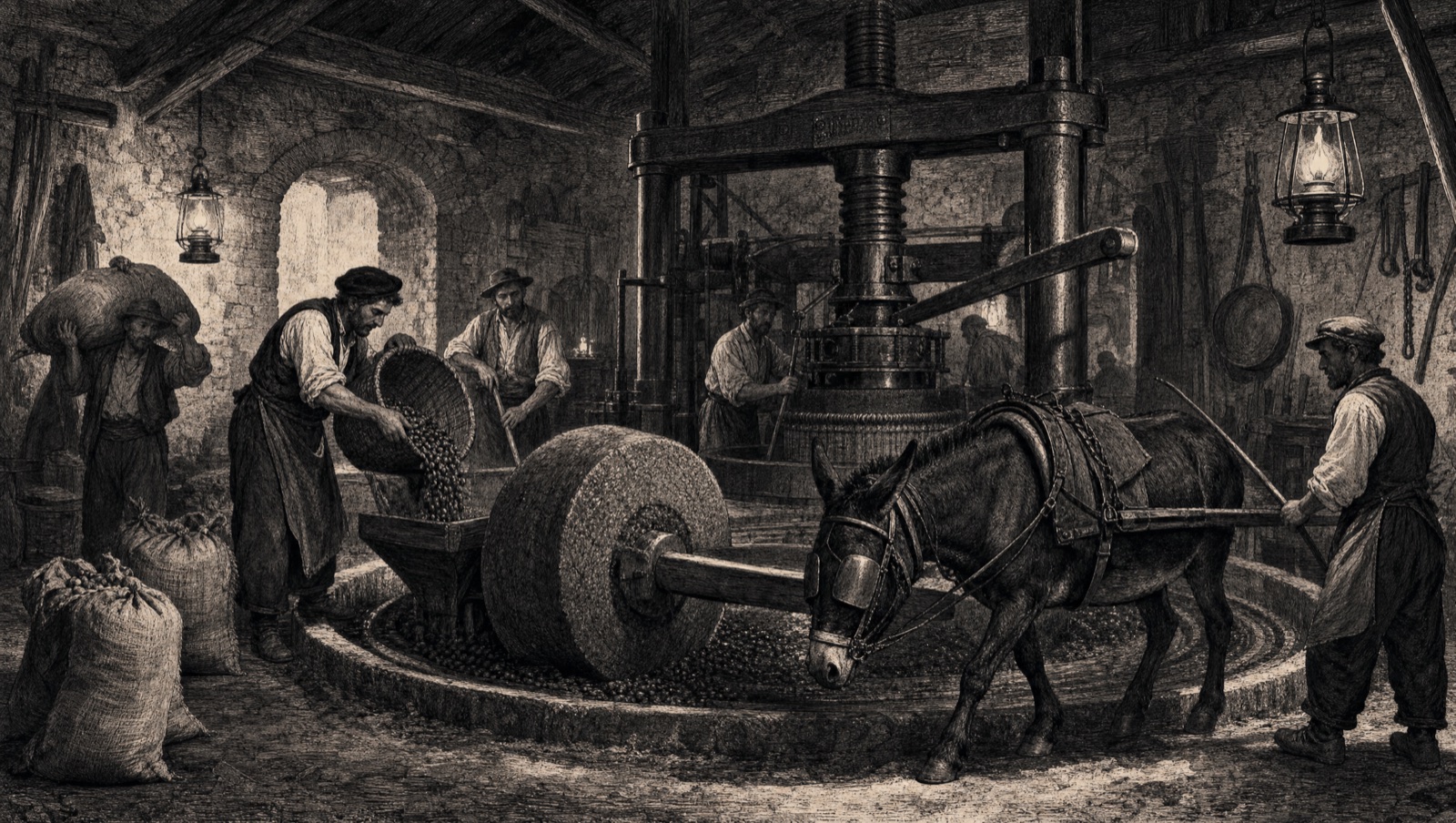
The 19th century brought to Sicily the first steam-powered mills — adaptations of English and German machinery. Replacing the lever press with the hydraulic press (Bramah patent, 1795, widespread in Sicily from the 1830s) doubled extraction yields.
At the same time, the phylloxera that destroyed European viticulture (1860–1890) pushed many Sicilian farmers to convert hill vineyards into olive groves. Many of the largest centuries-old olive groves still in production in the Iblei today are the result of those 19th-century conversions.
The 20th century: from latifundia to PDOs
The 20th century is the century of rapid transformations:
- 1920–1940: first olive-oil cooperatives, first attempts at standardisation
- 1950–1970: mechanisation, gradual abandonment of hand labour
- 1980–1990: birth of modern quality oil production, with the first continuous-cycle cold mills
- 1996: recognition of the PDO Monti Iblei (EC Reg. 1263/96), the first Sicilian PDO for olive oil
- 2000s: international awards (Sol d'Oro, Flos Olei, Gambero Rosso) systematically begin to recognise the quality of Sicilian oils
Today Sicily has seven PDO olive oils (Monti Iblei, Val di Mazara, Valli Trapanesi, Valle del Belice, Valdemone, Monte Etna, Colline Ennesi) and a PGI (Sicilia) covering the entire region.
Historical cultivars: a living genetic heritage
Over 40 native cultivars have been catalogued in Sicily — a genetic heritage unique in the world. The three most important for the Iblei:
| Cultivar | Historical area | Probable origin |
|---|---|---|
| Tonda Iblea | Iblean plateau (RG, SR) | Pre-Greek, possibly Phoenician |
| Moresca | South-eastern Sicily | Medieval, from Arab cultivation areas |
| Verdese | Western Iblei | Pre-Roman or Roman |
The centuries-old trees still seen today in the Ragusa countryside — some specimens documented at over a thousand years old, like the monumental olives of Cuffitedda (Chiaramonte Gulfi) — are vegetative clones of those ancient stocks. When you taste an oil of Tonda Iblea, you are enjoying a flavour profile selected for two thousand years by Sicilian farmers.
Iconography: where to see the history of Sicilian oil
For those who want to explore visually:
- Whitaker Museum, Mozia (TP) — Phoenician amphorae with oil traces
- Paolo Orsi Archaeological Museum, Syracuse — Greek mills and press weights
- Salinas Archaeological Museum, Palermo — Dressel 21–22 and Roman iconography
- Villa Romana del Casale, Piazza Armerina — mosaics with harvest scenes
- Museum of Country Life, Buscemi (SR) — a complete, functioning 19th-century mill
- Olive Tree Museum, Chiaramonte Gulfi (RG) — collection of olive-growing tools from the 18th to the 20th century
Ancient and modern sources
Ancient sources: Cato, De agri cultura | Varro, Rerum rusticarum | Pliny, Naturalis Historia XV | Columella, De re rustica XII | Thucydides, History of the Peloponnesian War VI | al-Idrisi, Kitāb Rujārū
Modern studies: Vallet & Villard, Mégara Hyblaea (École française de Rome) | Wilson, Sicily under the Roman Empire (1990) | Molinari, La Sicilia islamica (2014) | Aprile, Storia dell'olio d'oliva in Sicilia (Sellerio, 2017) | Sicily in Transition project (University of Leicester, 2017–2022)
From Mozia to today: what remains in a single drop
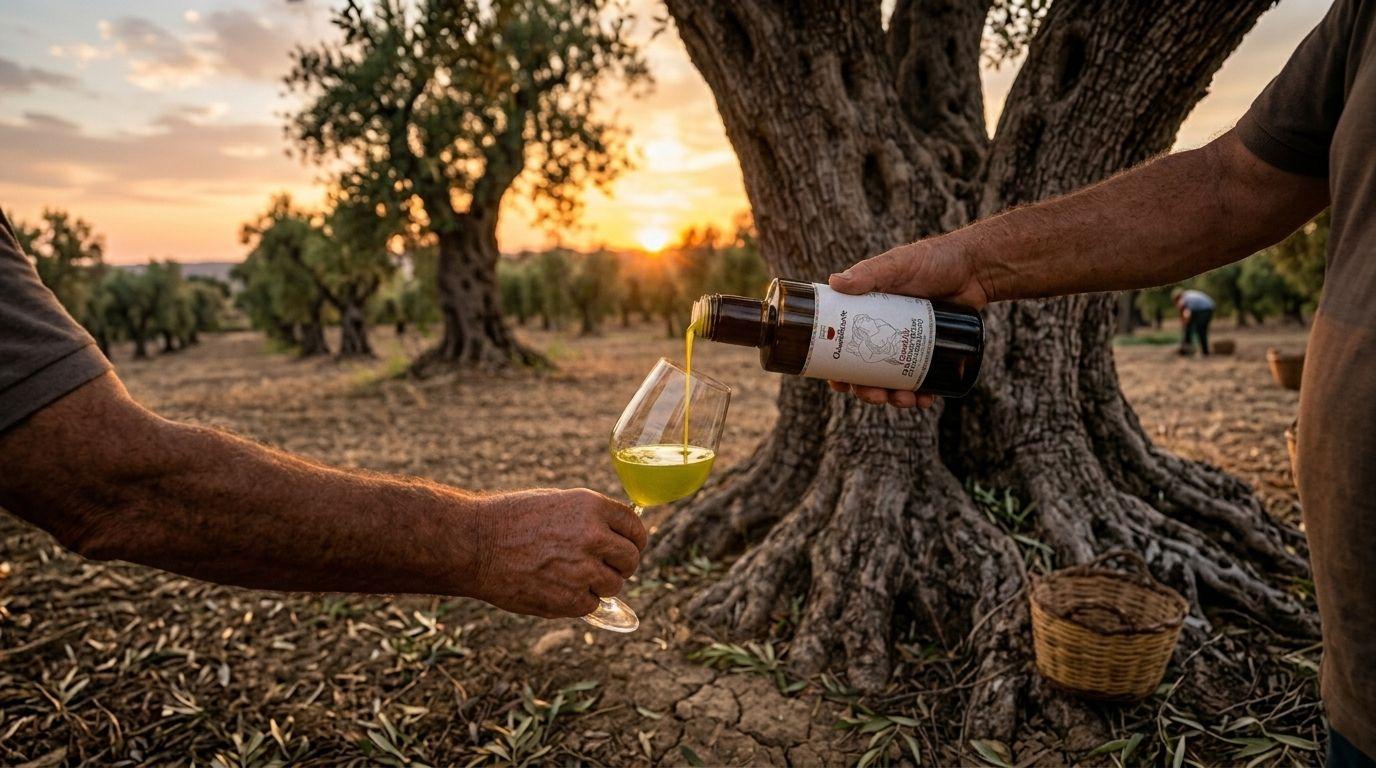
When you pour an Iblean extra virgin onto your plate, you are performing a very ancient gesture. The same one made by the Phoenicians at Mozia in the 7th century BCE, by Greek merchants in Syracuse, by Roman legionaries in Britain, by Arab farmers in the gibbara, by Norman monks in Monreale, by Bourbon barons in Ragusa, by the grandparents of the Iblean farmhouses of the 20th century.
A well-made oil is liquid memory of the Mediterranean. Not a romantic notion: a verifiable truth in every amphora recovered, every stone mill still intact, every thousand-year-old olive tree that continues, today, to bear fruit.
Read also
Want to taste the same flavours that have crossed three thousand years of history? Explore our single-cultivar extra virgin olive oils — Il Distinto (Tonda Iblea), Il Galante (Moresca) and our other Sicilian extra virgin olive oils — produced in the very territories where the Phoenicians planted the first olives.