olive-oil · sicily · pdo · monti-iblei · guide
Sicilian Extra Virgin Olive Oil: the complete guide to the island's olive heritage
Everything you need to know about Sicilian extra virgin olive oil: ~150 native cultivars, 6 PDOs, the Sicilia PGI, sensory profiles by macro-area and up-to-date production figures.
Sicilian extra virgin olive oil is one of Italy's richest — and least told — gastronomic heritages. The country's third largest olive-growing region by planted surface, Sicily preserves around 150 native cultivars, 25 of them registered in the Italian National Varietal Register, across 161,179 hectares (CREA-ISMEA, 2023). Six PDOs (Protected Designation of Origin), one regional PGI (Protected Geographical Indication) and a mosaic of microclimates make the island a sensory laboratory without equal in Europe.
This guide walks through what really makes Sicilian extra virgin olive oil unique: the cultivars, the designations, the sensory profiles by macro-area, the latest production data, and how to choose a bottle with confidence.
What is Sicilian extra virgin olive oil?
By definition, extra virgin olive oil is obtained only by mechanical means (crushing, malaxation, cold extraction) from the fruit of Olea europaea, with free acidity below 0.8%, peroxides below 20 meq O₂/kg and a defect-free sensory evaluation.
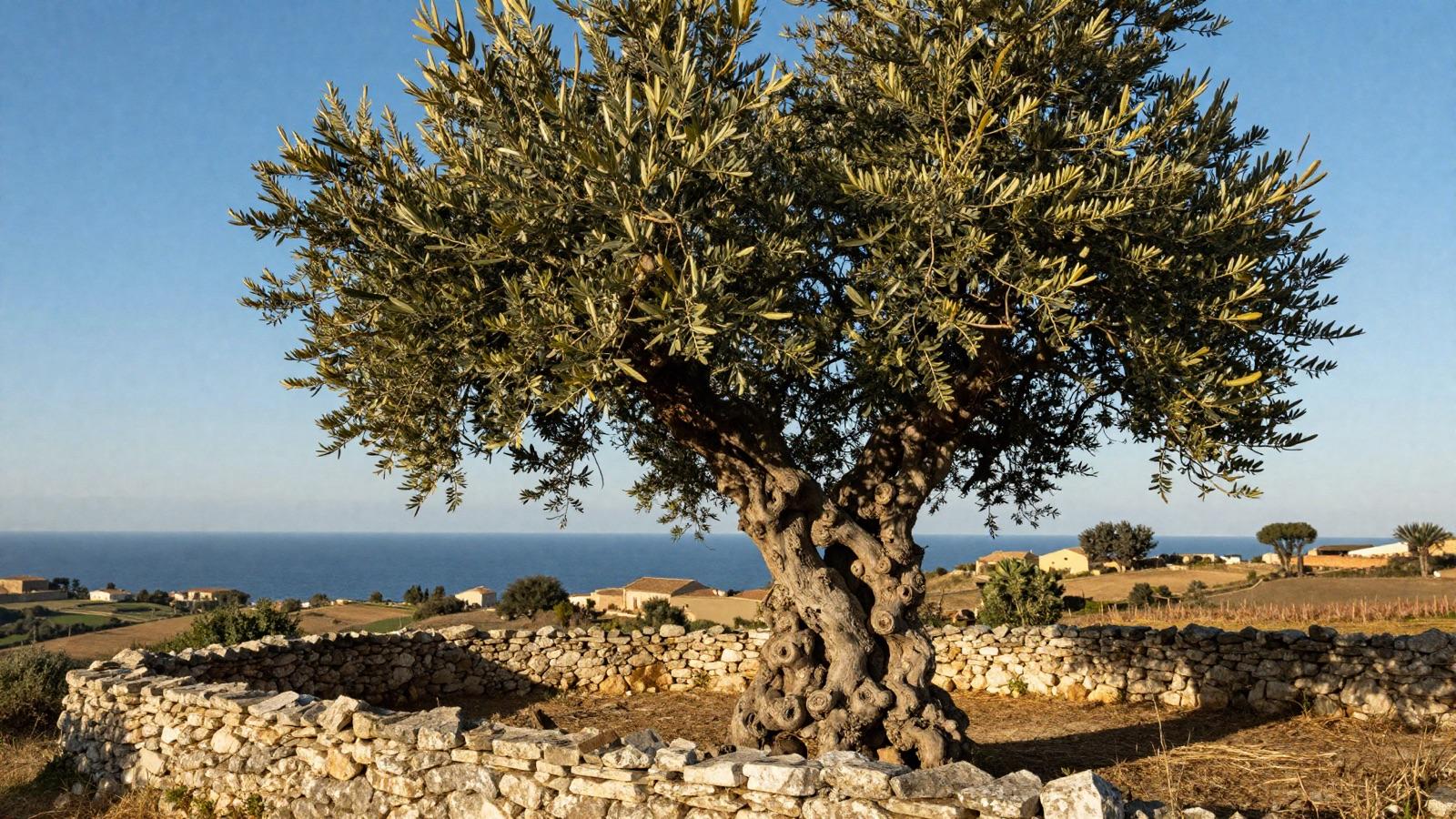
When we say Sicilian EVOO, we add a layer of specificity. This oil is born on an island with an extraordinarily varied geography — from the warm Mediterranean shores of the west (Agrigento, Trapani) to the 1,500 m slopes of Mount Etna, with the limestone Hyblaean plateau and the Nebrodi mountains of the north in between. The result is a diversity of soils, exposures and cultivars unmatched by any other Italian region.
According to IRVOS (Sicilian Regional Institute for Wine and Oil), "almost all Sicilian oils are extra virgin and they are particularly rich in polyphenols compared to those of other regions" (OLIO report, July 2025) — a trait that makes them valuable both nutritionally and aromatically.
Sicily's native cultivars
The eight main cultivars grown on the island, per IRVOS's 2025 official classification, are:
| Cultivar | Main area | Sensory profile |
|---|---|---|
| Tonda Iblea | Hyblaean Mountains (CT/RG/SR) | Medium-intense green-olive fruitiness; tomato leaf, artichoke, aromatic herbs, almond; medium to high bitterness and pungency, persistent |
| Nocellara del Belice | Belice Valley (TP/AG) | Medium-intense fruitiness, grass/leaf, tomato, almond |
| Nocellara Etnea | Mount Etna (CT) | Medium-intense fruitiness, grass/leaf, tomato |
| Nocellara Messinese | Messina province | Medium-intense fruitiness, herbaceous |
| Biancolilla | Widespread, mainly west | Medium-intense herbaceous fruitiness, artichoke, fresh almond, tomato |
| Cerasuola | West (AG/TP) | Similar to Biancolilla but with higher polyphenols and pungency |
| Moresca | Hyblaeans and south-east | Medium fruitiness, almond, tomato, rounded finish |
| Ogliarola Messinese | Peloritani/Nebrodi (ME) | Intense fruitiness, grass, leaf, artichoke |
Alongside these, minor cultivars are crucial for biodiversity: Santagatese (Messina), Minuta and Verdello (Messina), Zaituna — an ancient Syracusan variety listed as a Slow Food Presidium in 2025 — and Giarraffa (Palermo, concentrated in Giuliana). Coratina and Carolea are also found in the Catania area but originate from Apulia and Calabria respectively.
Sicily's 6 PDOs and the Sicilia PGI
Sicily is the only Italian region with six Protected Designations of Origin for olive oil, plus a regional PGI covering the entire territory. The list is confirmed by Masaf, CREA and IRVOS:
| Designation | Area | Main cultivars |
|---|---|---|
| PDO Monte Etna | Slopes of Mount Etna (CT) | Nocellara Etnea, Moresca |
| PDO Monti Iblei | Hyblaean plateau (CT, RG, SR) | Tonda Iblea, Moresca, Nocellara Etnea, Verdese, Biancolilla, Zaituna ≥80% |
| PDO Val di Mazara | Agrigento and Palermo | Nocellara del Belice, Biancolilla, Cerasuola |
| PDO Valdemone | Peloritani-Nebrodi (ME) | Ogliarola Messinese, Santagatese |
| PDO Valle del Belice | Belice (TP/AG) | Nocellara del Belice (monovarietal) |
| PDO Valli Trapanesi | Trapani province | Nocellara del Belice, Cerasuola |
| PGI Sicilia (since 2016) | Whole region | 28 native cultivars allowed |
The Sicilia PGI, established by Italian Official Gazette no. 237 of 10 October 2016, allows 28 cultivars (Aitana, Biancolilla, Bottone di gallo, Brandofino, Calatina, Cavalieri, Cerasuola, Crastu, Erbano, Giarraffa, Lumiaru, Marmorigna, Minuta, Moresca, Nasitana, Nerba, Nocellara del Belice, Nocellara Etnea, Nocellara Messinese, Ogliarola Messinese, Olivo di Mandanici, Piricuddara, Santagatese, Tonda Iblea, Vaddarica, Verdello, Verdese, Zaituna) alone or in combination, with up to 10% other varieties. Growth has been explosive: from 15 t certified in 2016 to around 2,100 t in 2024.
PDO Monti Iblei: the south-east benchmark
The PDO Monti Iblei — the territory where Tenuta Chiaramonte's olive oil is born — is the most highly valued Sicilian designation on the market. We've written a dedicated guide to PDO Monti Iblei. The specification (Art. 2, EU Reg. 2020/C 273/04) requires:
- composition at least 80% from the varieties Tonda Iblea, Moresca, Nocellara Etnea, Verdese, Biancolilla and Zaituna, alone or in combination
- cold extraction within defined times and temperatures
- minimum polyphenol content ≥120 ppm — well above standard EVOO thresholds
- defect-free sensory evaluation by a certified panel
The designation breaks down into eight optional geographical mentions: Monte Lauro, Val d'Anapo, Val Tellaro, Frigintini, Gulfi (Chiaramonte Gulfi, RG), Valle dell'Irminio, Calatino and Trigona-Pancali — recently extended to Avola, Mirabella Imbaccari, Scordia and Carlentini.
On producer prices (ISMEA, ex-VAT, ex-mill), PDO Monti Iblei rose from €10.7/kg in 2023 to €11.7/kg in 2024 (+12%) and €12.5/kg in the first half of 2025 (+7.1%). It is the highest quotation among all Sicilian geographical indications — a market signal of quality recognition.
Sensory profiles by macro-area
Sicily is too vast for a single "Sicilian profile". The regional government's Agriculture Department (Terrà portal) maps the island by macro-area:
- North (Peloritani-Nebrodi, PDO Valdemone — Ogliarola Messinese, Santagatese): "intense fruitiness, grass/leaf notes, artichoke nuances". Herbaceous, elegant, marked oils.
- West (PDO Val di Mazara, Valli Trapanesi, Valle del Belice — Nocellara del Belice, Cerasuola, Biancolilla): "highly fragrant oils with typical almond and tomato notes". Softer profile, green fruitiness, sweet-almond finish.
- East (PDO Monti Iblei and Monte Etna — Tonda Iblea, Nocellara Etnea, Moresca): "pronounced notes of fresh almond and tomato". Structured profile, more marked bitterness and pungency, long persistence.
Tonda Iblea and Nocellara del Belice fall into Sensory Type 4 of the Italian Monovarietal Oils Database (medium-intense fruitiness, medium bitterness/pungency, predominant grass/leaf and tomato notes); Biancolilla and Cerasuola into Type 5 (higher intensity, herbaceous, fresh almond, artichoke).
Polyphenols, acidity and nutritional quality
Polyphenols are the antioxidant compounds that give EVOO its characteristic bitterness and pungency and that drive much of its health value. EU Regulation 432/2012 allows the LDL-cholesterol health claim for oils with at least 250 mg/kg of hydroxytyrosol and derivatives.
IRVOS identifies polyphenol richness as a defining trait of Sicilian production compared to the national average. Analytically, the PDO Monti Iblei specification requires a minimum of 120 ppm, but many quality producers reach values above 400-500 mg/kg.
In fairness, the regional government itself warns that "Sicilian olive oil does not have well-defined organoleptic traits" given the diversity of cultivars and environments — generalisations are useful as orientation, not as dogma.
2024/25 production: numbers and context
The 2024/25 olive oil campaign saw Italian production fall -24% year-on-year to 248,394 tonnes (ISMEA, July 2025). The South — which accounts for 86% of national volumes — paid the highest price, with a -41% drop not offset by good harvests in the North (+75%) and Centre (+70%). Drought and heat were the main drivers.
In Ragusa province, the heart of PDO Monti Iblei, the 2024/25 season saw 11,295,432 kg of olives milled and 1,468,267 kg of oil produced across 30 active mills, with an average yield of 13% (AGEA-SIAN via ISMEA data).
At a structural level, Sicily counts:
- 161,179 hectares planted with olive trees (2023)
- Around 150 cultivars in the regional varietal heritage
- 25 cultivars in the National Varietal Register
- 35,171 tonnes average production (2020-2023 campaigns)
How to recognise a good Sicilian EVOO
When choosing a Sicilian extra virgin olive oil, look for concrete indicators:
- Explicit geographical indication: PDO or PGI mark on the label, with mention of the consortium
- Declared cultivar: monovarietals and blends with named varieties (Tonda Iblea, Nocellara, etc.) are more transparent
- Free acidity: the best Sicilian EVOOs are well below 0.3% (the legal limit for extra virgin is 0.8%)
- Harvest date: it must be stated, not just the expiry date — EVOO is at its best within 12-18 months
- Polyphenols: some producers declare the analytical value on the label or tech sheet
- Cold extraction: temperatures below 27°C preserve aromas
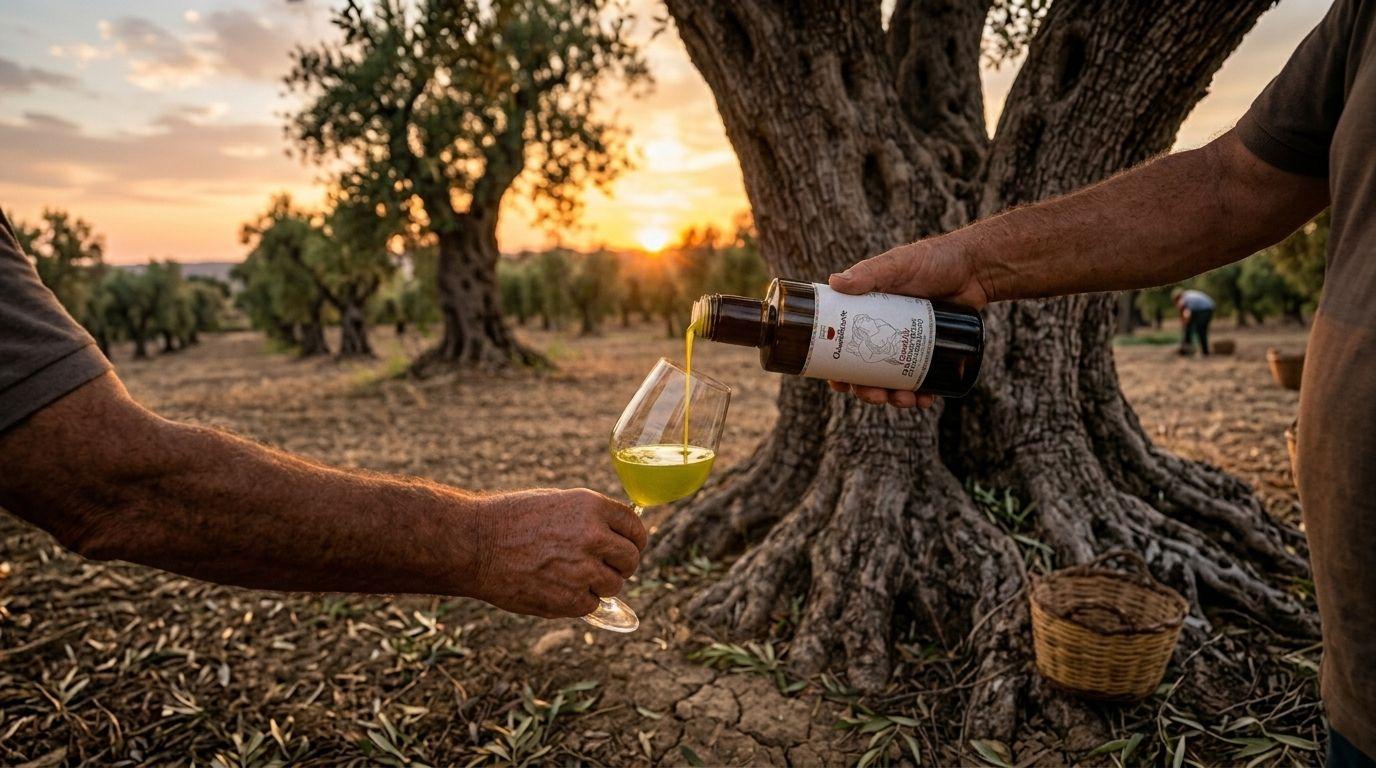
- Dark glass bottle: light is the first enemy of polyphenols
Frequently asked questions
What are Sicily's 6 olive oil PDOs?
Monte Etna, Monti Iblei, Val di Mazara, Valdemone, Valle del Belice and Valli Trapanesi. Plus the Sicilia PGI, which covers the entire regional territory and allows 28 native cultivars.
Which is the most important cultivar in eastern Sicily?
Tonda Iblea is the queen variety of the Hyblaean Mountains (Ragusa, Catania and Syracuse provinces) and is the backbone of PDO Monti Iblei. Intense profile with green tomato, artichoke and almond notes. We compared it with Moresca and Verdese in our guide to the three cultivars.
Is Sicilian EVOO richer in polyphenols?
According to IRVOS, Sicilian oils are "particularly rich in polyphenols compared to those of other regions". The PDO Monti Iblei specification requires at least 120 ppm, but many producers exceed 400 mg/kg.
How much does PDO Monti Iblei oil cost?
On the wholesale market, the 2024/25 producer price ranged from €11.7 to €12.5/kg (ISMEA), the highest quotation among Sicilian GIs. At consumer level, a 500 ml bottle of quality PDO Monti Iblei oil typically starts at €14-20.
How does extra virgin differ from virgin olive oil?
Extra virgin has free acidity ≤0.8% and zero sensory defects; virgin allows acidity up to 2% and minor defects. Oil simply labelled "olive oil" is a blend of refined oil and a small share of virgin oil.
How much does Sicily produce each year?
Average Sicilian production is around 35,171 tonnes (2020-2023 ISMEA campaigns), spread over 161,179 hectares. The 2024/25 campaign was hit by drought and heat, with a significant drop especially in Southern Italy (-41%).
Sicilian extra virgin olive oil is not "an" oil: it is a mosaic of territories, cultivars and traditions. Knowing your PDO, your cultivar and your mill is the most direct way to bring to the table a product that really tells a place. Discover the PDO Monti Iblei oils by Tenuta Chiaramonte — Il Distinto (Tonda Iblea), Il Galante (Moresca) and Il Primizio — grown organically on the Hyblaean plateau, in Ragusa province.
Read also
- Guide to DOP Monti Iblei Extra Virgin Olive Oil
- Tonda Iblea, Moresca, Verdese: three cultivars compared
- The history of olive oil in Sicily
Tenuta Chiaramonte's oils, DOP Monti Iblei and IGP Sicilia, are compared with a buying guide on our Sicilian extra virgin olive oil page.
Cited sources: ISMEA "Tendenze olio" July 2025; IRVOS "OLIO" July 2025; CREA "Carta degli oli Sicilia" September 2024; Sicilian Regional Government, Agriculture Department (Terrà portal); Masaf — PDO/PGI registry; PDO Monti Iblei Consortium; PGI Sicilia specification (Italian Official Gazette no. 237 of 10/10/2016).