recipes · caponata · preserves · sicilian cooking
Sicilian caponata: the original Ragusa recipe, step by step
Fried aubergines, celery, onion, tomato, olives and capers bound by a gentle sweet-and-sour. Caponata the way we make it at the estate, with the right quantities and the three mistakes that ruin it.
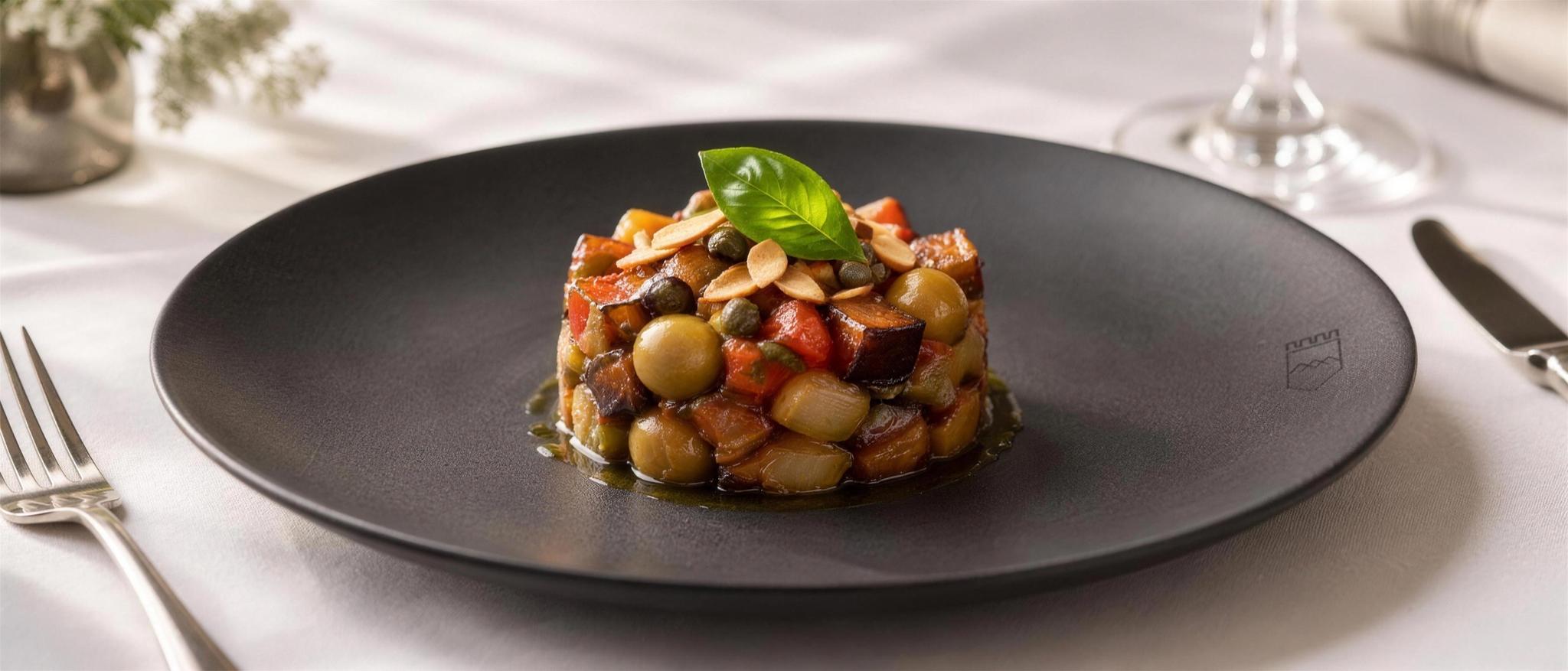
Caponata is the Sicilian dish nobody agrees on. Every province has its own, every family corrects the province's version, and "the original" is always the one made by the grandmother of whoever is talking. Here we give you the Ragusa version, the one cooked in the Hyblaean countryside and the one we prepare at the estate: few ingredients, all from the vegetable garden, a discreet sweet-and-sour that accompanies the aubergines instead of covering them.
At the end you will also find the differences from the Palermo and Catania versions, so you can decide which side you are on.
What makes Ragusa caponata different
Three things:
- The sweet-and-sour is light. In Ragusa caponata is not a dessert. Vinegar and sugar are there to bind, not to be the first thing you taste.
- No pine nuts or raisins. They are a Palermo addition, delicious, but not from Ragusa. Here the sweetness comes from the onion and the tomato.
- The vegetables stay recognisable. Each ingredient is cooked on its own and combined at the end: caponata is not a sauce, it is a set of pieces keeping each other company.
Ingredients for 6
- Aubergines: 1 kg (purple, round or long, firm)
- Celery: 3 stalks, tender part only
- Onion: 2 medium, white or Giarratana if you can find them
- Tomato: 400 g of passata or peeled tomatoes (we use our cherry tomato sauce)
- Green olives: 150 g, pitted (our Tonda Iblea dressed olives work best)
- Capers: 2 tablespoons, salted and rinsed
- White wine vinegar: 60 ml
- Sugar: 1 level tablespoon
- Extra virgin olive oil: plenty for frying and a drizzle raw (a fruity oil like Il Galante stands up to frying, Il Primizio for finishing)
- Salt and fresh basil
Method
1. The aubergines (30 minutes). Cut them into 2-3 cm cubes, salt them and leave them in a colander for half an hour with a weight on top: they lose their bitter water and absorb less oil. Dry them well and fry in hot extra virgin olive oil, a few at a time, until golden but still whole. Drain on paper.
2. The celery (10 minutes). Cut the stalks into pieces and blanch for 3 minutes in salted water: they stay crunchy without being stringy. Drain and set aside.
3. The base (15 minutes). In a wide pan soften the sliced onion in three tablespoons of oil over a low heat, without colouring it. Add the tomato, a pinch of salt, and cook for 10 minutes until the sauce thickens.
4. Bringing it together (10 minutes). Add the celery, olives and capers to the base. Stir for a couple of minutes. Dissolve the sugar in the vinegar, pour it into the pan and raise the heat to drive off the sharpest acidity: it takes a minute, and you will smell the change.
5. The aubergines, last. Turn off the heat and only now add the fried aubergines, stirring gently so they do not break. Torn basil, a drizzle of raw oil.
6. The rest. This is the ingredient that is always missing. Caponata must cool down and be eaten at room temperature, the next day. Served hot it is a side dish; served the next day it is caponata.
The three mistakes that ruin it
- Aubergines cooked in the sauce. They turn to mush and soak up everything. Fry them separately and add off the heat.
- Too much vinegar. If the first thing you taste is acid, you have made pickles. Better to add a little and adjust.
- Serving it straight away. Caponata needs a night in the fridge for all the ingredients to talk to each other.
The variations: Palermo, Catania and the others
- Palermo: adds pine nuts and raisins, sometimes cocoa or toasted almonds; a stronger sweet-and-sour.
- Catania: peppers come in, fried with the aubergines, and there is more sauce.
- Trapani and the islands: versions with fish (tuna, swordfish) or with potatoes.
- Ragusa: the driest and most vegetable-led, the one on this page.
None of them is "wrong". But if you were looking for the Hyblaean version, this is it.
How to serve it
As a starter with warm bread, as a side for white meat or grilled fish, on a bruschetta with a drizzle of new-season oil, or as a cold sauce for short pasta. At the estate we serve it at the Le Gramole restaurant and on summer evenings at Qirat, always at room temperature.
If you have no time to make it
We make it too, with vegetables from the estate garden and our own oil, in a jar: the Sicilian Caponata in the shop is exactly this recipe, with no preservatives, ready to open. With the dressed olives and salted capers you have the complete Hyblaean pantry.
Read also
- Sicilian flavoured oils: quick recipes
- Tonda Iblea, Moresca, Verdese: the Sicilian cultivars
- How to recognise a genuine extra virgin olive oil
Tenuta Chiaramonte's preserves, caponata included, are made with organic vegetables and the estate's own extra virgin olive oil in Ragusa, and are available in the online shop with shipping across Italy and Europe.