cooking · olive-oil · guide
Can you fry with extra virgin olive oil? Smoke point, myths and tips
Extra virgin olive oil handles frying better than most people think. Smoke point, the right temperature, when to use it raw and when to cook with it, and the most common myths.
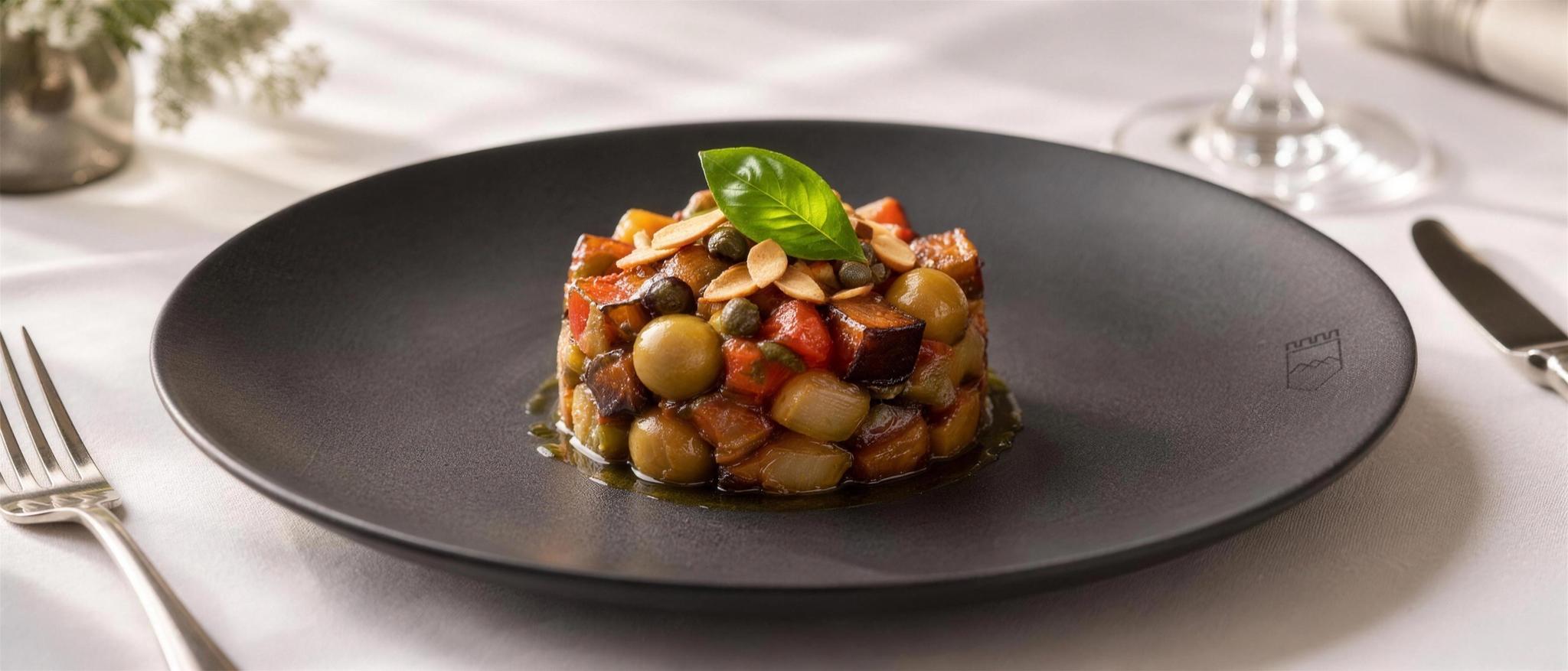
"You shouldn't fry with extra virgin olive oil." It is one of the most repeated lines in the kitchen, and it is wrong. In Sicily, as all around the Mediterranean, people have always fried in olive oil: the aubergines for caponata, panelle, small oily fish.
Let's look at what the chemistry really says, how to fry well with extra virgin olive oil and when it makes more sense to keep it for using raw.
The smoke point of extra virgin olive oil
The smoke point is the temperature at which a fat starts to smoke and break down, producing irritating, unpleasant compounds. For a good extra virgin olive oil it is generally between 190 and 210 °C: the better the oil, with low acidity and plenty of antioxidants, the higher it is.
Frying at home, on the other hand, is done between 160 and 180 °C. Extra virgin olive oil therefore stays comfortably below its smoke point.
The smoke point isn't the whole story
The smoke point alone doesn't tell you everything. What also matters is how well an oil resists oxidation when it is held at a high temperature for a long time. And here extra virgin olive oil has two advantages:
- it is rich in oleic acid, a monounsaturated fat that is stable under heat, whereas many seed oils are rich in polyunsaturated fats, which oxidise more easily;
- it contains natural antioxidants, polyphenols and tocopherols, which protect it during cooking.
That is why several studies have found that extra virgin olive oil, when heated for a long time, forms fewer breakdown compounds than many common seed oils.
How to fry well with extra virgin olive oil
- Check the temperature: between 160 and 180 °C. If you don't have a thermometer, drop in a small piece of bread: it should sizzle straight away and turn golden in a few seconds, without burning.
- Use enough oil: the food should float. With too little oil the temperature collapses as soon as you add the ingredients and the food soaks up the oil.
- Fry a few pieces at a time, for the same reason.
- Dry the ingredients well: water lowers the temperature and makes the oil spit.
- Don't let it smoke: if the oil is smoking, it is too hot. Turn the heat down.
- Drain on kitchen paper and salt at the end.
Can you reuse frying oil?
Best not to, or once at most, filtered and stored in the dark. Oil that has darkened, smells acrid or foams should be thrown away. But not down the sink: take used oil to your local collection point or recycling centre.
Which oil to cook with and which to use raw
Heat doesn't ruin extra virgin olive oil, but it does soften its most delicate aromas and some of its polyphenols. That is why it pays to use two oils:
- for frying, sautéing and baking, a good everyday extra virgin olive oil with a mild flavour. Our L'Amabile, organic and 100% Italian, is made for exactly this, and also comes in 5 litre tins and bag-in-box, which make frying more economical;
- raw, at the end of cooking, an extra virgin olive oil with character, where the aromas, bitterness and pepperiness really come through: a PDO oil such as Il Distinto on pulses and grilled dishes, Il Galante on pasta and vegetables, Il Primizio on fish.
The golden rule is simple: cook with a good oil, finish with a great one. A drizzle of raw oil on the finished dish gives back all the aroma that cooking took away. We work out what this choice really costs per serving in our article on how much a good extra virgin olive oil costs.
Three myths about cooking with extra virgin olive oil
"Food fried in extra virgin olive oil is bad for you." False: used at the right temperature, it is one of the most stable fats for frying. What is bad for you is oil that has been overheated or reused too many times, whatever the type.
"Its flavour is too strong for frying." It depends on the oil. A mild extra virgin olive oil leaves fried food with a clean, slightly fruity taste. The more intense oils are best kept for using raw, but more for reasons of price than of flavour.
"It loses all its properties when cooked." No: it remains a quality fat, monounsaturated and stable. It loses some of its polyphenols and aromas, which you can restore with a drizzle of raw oil.
Sicilian frying
In Sicily, frying in olive oil is a tradition: the aubergines for caponata, panelle (chickpea fritters), potato croquettes, small oily fish dusted in flour. Try them with a mild extra virgin olive oil and finish the dish with a drizzle of raw oil: that is how it has been done for centuries.
In short
Yes, you can fry with extra virgin olive oil, and in fact it is one of the best choices: its smoke point, between 190 and 210 °C, is well above frying temperature, and it resists oxidation better than many seed oils. Use an everyday extra virgin olive oil for cooking, keep the PDO oils for using raw, keep an eye on the temperature and don't reuse the oil more than once.
Read also
- Sicilian caponata: the original Ragusa recipe, step by step
- Tonda Iblea, Moresca, Verdese: three Sicilian cultivars compared
- How much does a good extra virgin olive oil cost (and why the price matters)
For everyday cooking, frying included, choose L'Amabile in a 5 litre tin or bag-in-box; for drizzling raw, our PDO oils. You can compare them all on our Sicilian extra virgin olive oil page.