production · malaxation · quality
Temperature and olive oil quality: why cold malaxation makes the difference
Few people realise how decisive temperature is for a quality olive oil. The secret lies in cold malaxation: here's what happens between the olive and the bottle.
Few people realise how decisive temperature is in producing a truly high-quality olive oil. And yet it is precisely during processing — in the hours between the olive and the bottle — that precise heat control makes the difference between an outstanding extra virgin and an anonymous one.
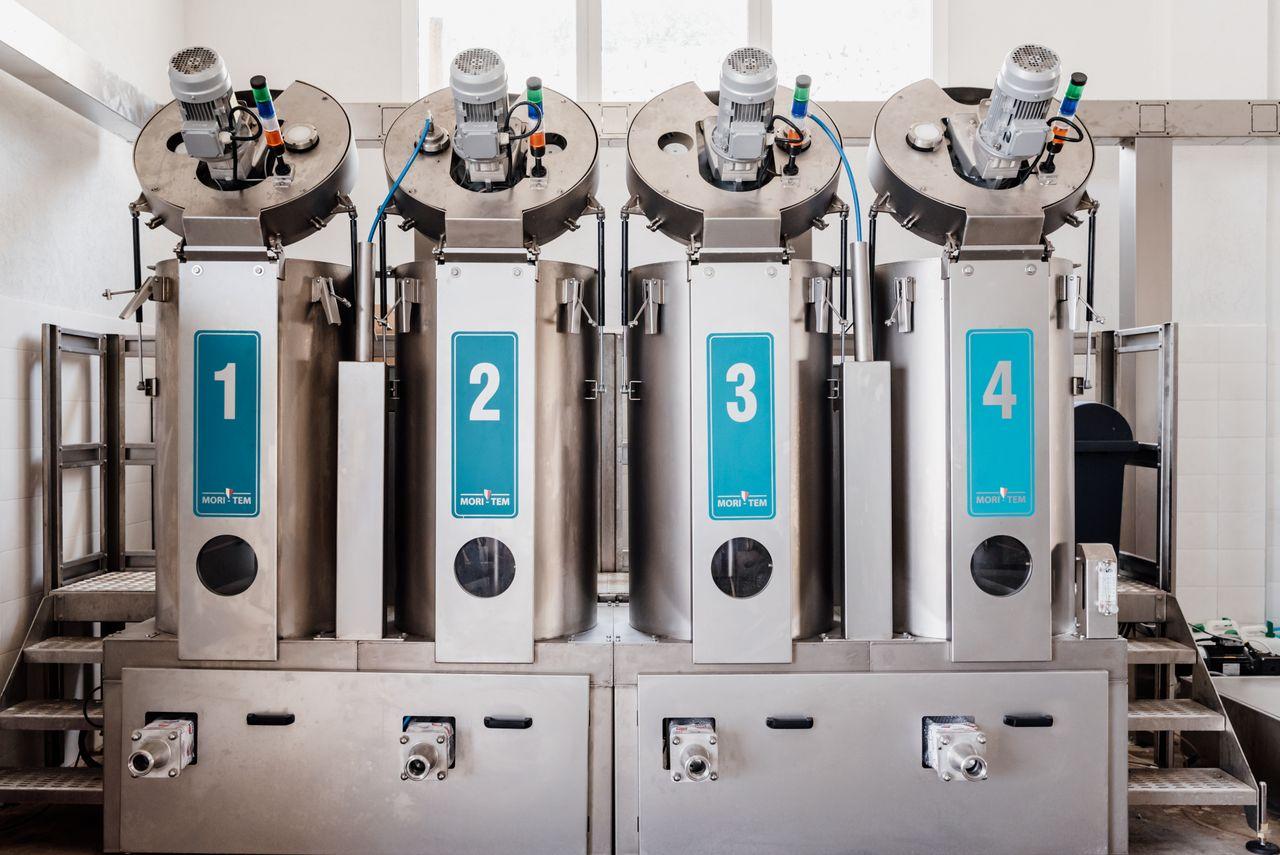
At Tenuta Chiaramonte we use temperature-controlled vertical malaxers for exactly this reason: to keep the heat constant and optimal, without ever stressing the olive paste. Here's why it matters so much.
What malaxation is
After crushing, the olives become a dense paste. Malaxation is the slow mixing of this paste: it allows the microscopic droplets of oil to merge into larger drops, which then separate easily from the water and the pulp. It's a step invisible to the consumer, but it's here that much of the final aroma and properties are decided.
The 27°C threshold
By law, an oil can be called "cold extracted" only if the paste never exceeds 27°C during processing. This is no bureaucratic detail: above that threshold the most valuable compounds begin to degrade.
- The volatile aromas — the fruitiness, the notes of grass, artichoke and tomato — evaporate with heat.
- The polyphenols, the natural antioxidants that give bitterness and pungency and protect the oil from oxidation, are reduced.
- The risk of defects such as "fustiness" and oxidation notes increases.
Keeping temperatures low and constant means preserving all of this inside the bottle.
Why vertical malaxers
Vertical malaxers offer concrete advantages over traditional horizontal ones:
- Less surface exposed to air → less oxidation during mixing.
- More uniform heat exchange → the temperature stays constant throughout the mass, with no hot spots.
- Gentler mixing → the paste works without excessive mechanical stress.
The result is a gentler process that respects the raw material instead of forcing it.
What changes in the glass
An oil processed at controlled temperature retains, at their best:
- aromas that are fresh and recognisable,
- a taste that is vibrant, with balanced bitterness and pungency,
- its natural properties, starting with polyphenols and vitamin E.
Control and care, not shortcuts: this is the difference between an anonymous oil and an extra virgin that tells the story of its land.
The Tenuta Chiaramonte method
Every detail of our supply chain is designed to respect the olive: harvesting at the right moment, rapid milling, cold malaxation with vertical malaxers and constant temperatures. It's not technology for its own sake, but a deliberate choice: we prefer a slightly lower yield to a truer oil.
🍃 Control + care = real quality.
Read also
- How to recognise a genuine extra virgin olive oil: 7 signs
- Reading the label: acidity, polyphenols, peroxides
Taste the result: discover Il Distinto or all our organic extra virgin olive oils from Tenuta Chiaramonte, in the Iblei Mountains near Ragusa.