extra-virgin-olive-oil · sicily · buying-guide
Best Sicilian extra virgin olive oil: how to choose it online without mistakes
Buying olive oil online is convenient but full of traps. Here are the 7 concrete criteria for spotting a genuine, high-quality Sicilian oil before it goes in your cart.
Finding the best Sicilian extra virgin olive oil online is harder than it looks. The digital shelf is endless, the labels all look alike, and the word "extra virgin" on its own guarantees nothing: it's the minimum legal category, not a seal of excellence. The result is that you often end up paying for marketing instead of oil.
This guide gives you the concrete criteria to choose without mistakes: what to actually read on a product page, which numbers matter, how to unmask an industrial blend dressed up as artisanal, and why buying directly from the producer changes everything.
Why "extra virgin" isn't enough
"Extra virgin olive oil" is simply the highest commercial grade set by law: free acidity below 0.8% and no sensory defects detected by the panel. It's the starting point, not the finish line. Within this grade there's a whole world: from the €5-a-litre industrial oil to the award-winning single-cultivar that costs ten times as much.
The difference isn't made by the words on the label, but by six factors that almost no site highlights. Let's take them one at a time.
1. Declared cultivar (or an anonymous blend?)
A quality oil tells you which olives it comes from. In Sicily the native cultivars that matter are above all Tonda Iblea, Moresca and Verdese, each with a sharp, recognisable profile. A single-cultivar oil — made from one variety — is like a single-varietal wine: it speaks of a precise territory.
If the product page only says "Italian extra virgin olive oil" or "Mediterranean blend" without naming the olives, it's almost always an industrial oil assembled to be cheap. We compared the three Sicilian profiles in our guide to the Tonda Iblea, Moresca and Verdese cultivars.
2. Harvest year, not just the expiry date
Extra virgin olive oil does not improve with age: it's at its best in the 12-18 months after harvest, then it declines. That's why the date that matters is the harvest year, not the two-year "best before" printed to satisfy the law.
A serious seller states it ("Harvest 2025") because they're proud of it. If you only find a "best before…" with no harvest date, you're buying blind: that oil could have been sitting in a warehouse for a year.
3. The numbers that matter: acidity and polyphenols
Two analytical parameters separate a good EVOO from an excellent one:
- Free acidity (% oleic acid): shows how fast and how well the olives were processed. The law allows up to 0.8%; a quality oil sits below 0.3%.
- Total polyphenols (mg/kg): the natural antioxidants, the ones you feel as bitterness and a peppery kick in the throat. A fine EVOO has 350-700 mg/kg. They're not a flaw: they're why the oil is good for you and exactly what you're looking for.
A transparent producer publishes these numbers on the page or in a downloadable data sheet. If they're missing, ask yourself why. To learn how to read them correctly, see our guide to acidity, polyphenols and peroxides on the label.
4. Traceable origin: PDO, organic and where the olives grow
The "made in Italy" label can hide olives bought abroad and simply bottled here. Look instead for verifiable indications:
- PDO (Protected Designation of Origin), such as PDO Monti Iblei: it ties the oil to a precise area and a controlled specification.
- Certified organic: it guarantees the growing method, not the taste, but it's a sign of seriousness.
- Named mill and area: a producer who owns the groves states where they are.
If you want to understand the real difference between these labels, we've dedicated a full guide to the PDO Monti Iblei.
5. How it's packaged: the bottle speaks
Oil is alive and fears light, heat and oxygen. The way it's packaged tells you whether the producer cares about what they sell:
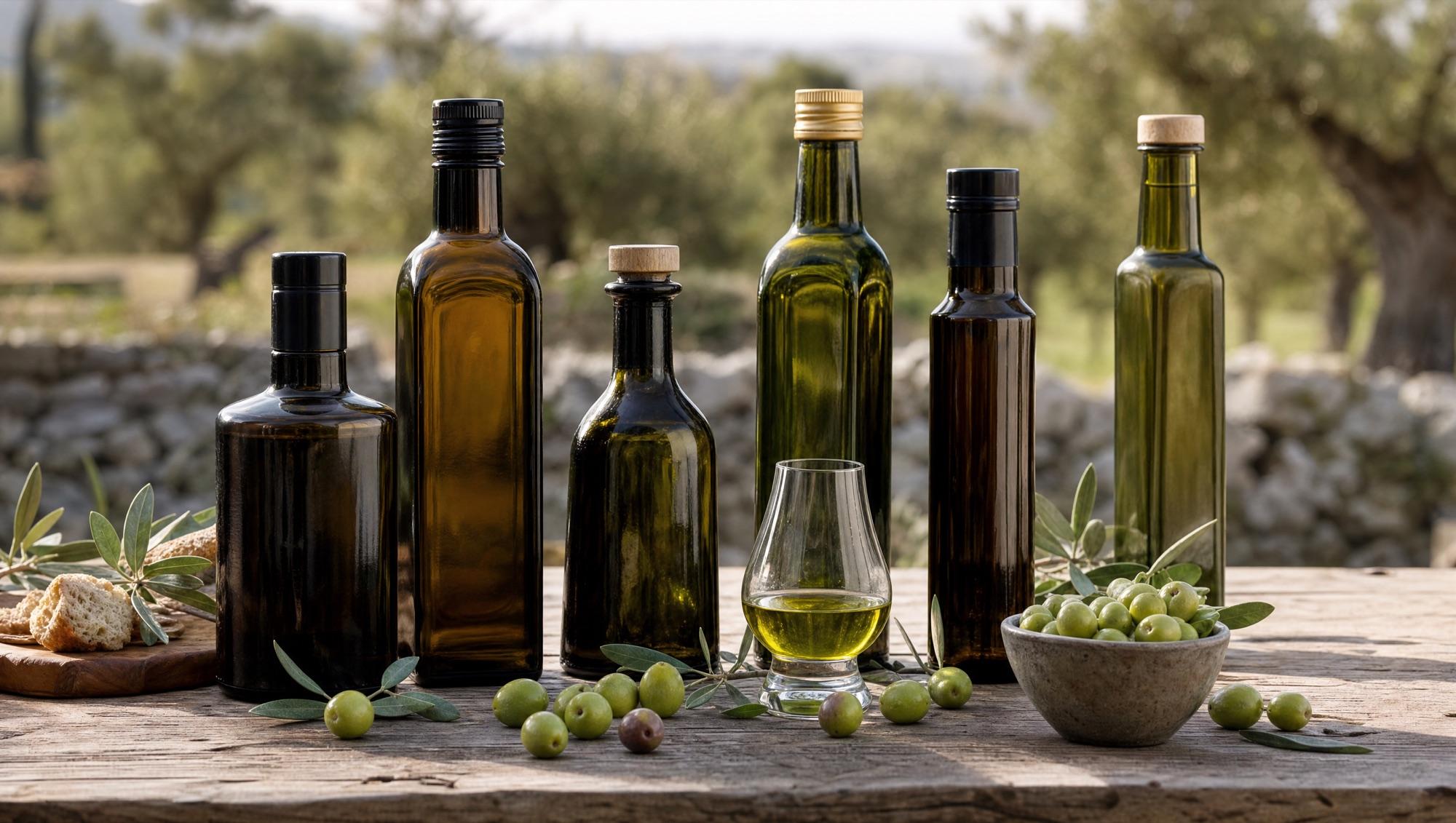
- Dark glass or a tin, never a clear bottle exposed to light.
- Sensible sizes: a good oil is used up within a few months, so 500 ml or 750 ml are ideal for a household; 3-5 litre tins only make sense if you use a lot, fast.
- Anti-refill cap on premium formats.
A fine oil sold in a clear supermarket bottle is a contradiction.
6. Price: what a genuine Sicilian EVOO really costs
A genuine, quality Sicilian extra virgin oil in a 500 ml bottle runs roughly €14 to €25. It seems a lot next to the €5-6 supermarket bottle, but behind that price there's real work:
- Low yield from centuries-old olive trees (they produce far less than commercial varieties)
- Early, rapid harvesting, often by hand
- Cold extraction within a few hours of harvest
- Olive selection and laboratory analysis
Beware of the opposite extreme: a "Sicilian PDO extra virgin" at €7 is almost certainly a marketing exercise. In this sector, a price that's too low is the most reliable warning sign.
7. Buy from the producer, not the reseller
The last criterion is where you click "buy". By purchasing directly from the producer:
- You know who made the oil and can trace it back to the grove
- The oil is fresher because it doesn't pass through intermediate warehouses
- You pay for the product, not the distribution chain's margins
- You can ask the maker about harvest, analysis and how to use it
That's why an olive farm's own online shop almost always beats the generalist marketplace on real value for money.
The quick checklist before adding to cart
Before you buy, check that the product page answers these questions:
- Which cultivars? (the name of the olives, not "blend")
- What harvest year? (not just the expiry)
- Acidity and polyphenols declared?
- Traceable origin? (PDO, organic, area, mill)
- Dark bottle or tin?
- A price consistent with a genuine artisanal oil? (neither too high nor suspiciously low)
- Direct sale from the producer?
If you get an answer to all seven, you're holding a serious oil. If the page is silent on three or more, change product.
In short
The best Sicilian extra virgin olive oil isn't the one with the prettiest label or the most aggressive discount: it's the one that tells you exactly what you're buying — cultivar, harvest, numbers, origin — and comes straight from whoever produced it. Online, this transparency matters even more, because you can't taste first. Learn to read the product page with these seven criteria and you'll never get the purchase wrong again.
Read also
- Guide to PDO Monti Iblei extra virgin olive oil: cultivars, flavours, pairings
- Reading the oil label: acidity, polyphenols, peroxides
- How to recognise a genuine extra virgin olive oil
Ready to choose without mistakes? Discover our range of PDO Monti Iblei extra virgin oils: Il Distinto, a Tonda Iblea single-cultivar awarded Tre Foglie Gambero Rosso 2025, Il Primizio and L'Amabile. All with harvest, cultivar and analysis declared, shipped directly from our olive farm: compare them on our Sicilian extra virgin olive oil page.