quality · consumer · fraud
Fake olive oil coloured with chlorophyll: how to protect yourself (and why colour means nothing)
A little chlorophyll is enough to make seed oil look like extra virgin olive oil. How the fraud uncovered in recent seizures works, which social media tests don't work and what to check before you buy.
One topic is everywhere on social media right now: seed oil coloured green with chlorophyll and sold as extra virgin olive oil. It is not an urban legend. In recent years Italian law enforcement has repeatedly uncovered operations doing exactly this. But the true part often comes mixed with advice that doesn't help, such as the fridge test or judging the oil by its colour.
Here is how the fraud works, which tests don't work and which checks really protect you.
How the fraud works
The method is simple. It starts with a seed oil, usually sunflower, which costs a fraction of olive oil. Two colourants are added:
- chlorophyll, often in its copper form, for the green;
- beta-carotene, for the golden yellow.
The result has the colour of a young extra virgin olive oil. It is filled into tins or bottles labelled "extra virgin olive oil" and sold at "competitive" prices to shops, restaurants and private buyers.
Nothing may be added to virgin and extra virgin olive oil: by definition it is obtained from olives by mechanical means only. So a colourant in the bottle is already a fraud, whatever the starting oil.
Recent cases
Some of the cases reported by the specialist press in Italy:
- January 2026, Palma di Montechiaro (Agrigento, Sicily): the Carabinieri food protection unit placed 24 people under investigation. According to the prosecutors, they treated seed oils with copper chlorophyll and beta-carotene and sold them across Sicily, in Calabria, in the rest of Italy and in Germany. Thousands of litres of oil, colourants and around half a million euros in cash were seized.
- January 2026, Ravenna: over 3,800 litres sold as extra virgin. Analyses by the ICQRF (the anti-fraud inspectorate of the Italian Ministry of Agriculture) classified them as sunflower oil with colourants.
- 2024, Cerignola (Foggia): the Guardia di Finanza found three clandestine workshops and seized over 37,000 litres of coloured sunflower oil. More than 23,000 five-litre tins were already labelled "extra virgin olive oil". According to the regional environmental agency's analyses, the colourants exceeded the permitted limits.
- 2019, Apulia and Tuscany: the "Croce e Delizia" operation by the NAS (the Carabinieri health unit) led to the seizure of 16 tonnes of seed oil with chlorophyll and beta-carotene. The labels used the brands of companies that did not exist or were no longer active.
These are not isolated cases, and the technique has been the same for more than ten years.
Social media tests that don't work
"If it's green, it's good"
This is exactly the weak spot the fraud exploits: chlorophyll is there to give the oil the colour buyers expect. The colour of a genuine extra virgin olive oil depends on the cultivar and on when the olives were picked. An oil from early-harvested olives is green because it contains natural chlorophyll. An excellent oil from riper olives can be golden.
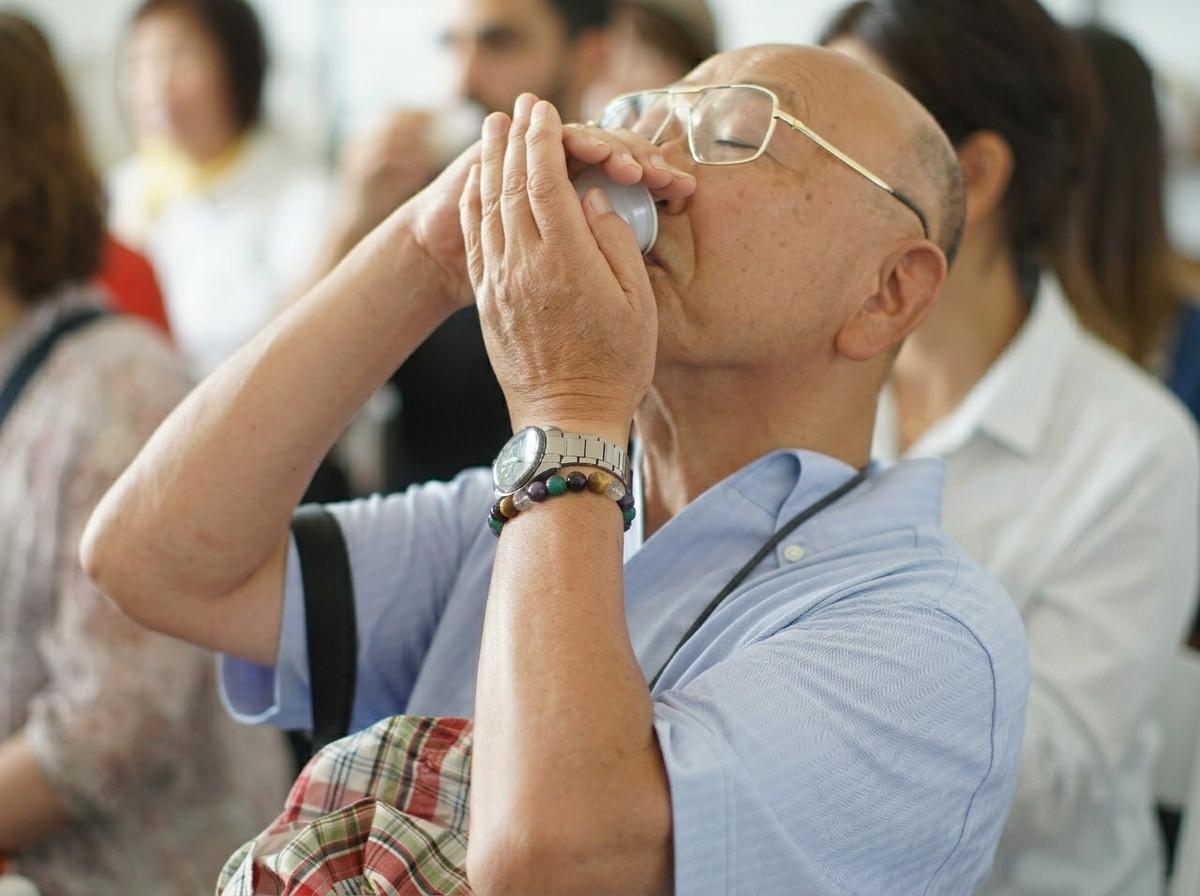
That is why, in official tastings, oil is tasted in a blue glass: colour must not influence the judgement.
The fridge test
The idea is that real extra virgin olive oil solidifies in the fridge and fake oil doesn't. It is not reliable. How much and how quickly an oil thickens in the cold depends on its composition, on the cultivar and on the temperature of the fridge. A genuine extra virgin can stay liquid, and a blend can turn cloudy.
The flame, the wick, the paper
Burning the oil, pouring it on a sheet of paper or comparing its thickness tells you nothing about where it comes from. These are tests made for videos, not analyses.
So how is it detected?
Added chlorophyll and seed oil can be identified with certainty only in a laboratory: by analysing the fatty acids and sterols and by testing for colourants. That is what the authorities do when they seize an oil. You can't do it at home, but you can do a lot before you buy.
What really protects you
1. The price
It takes 5 to 8 kg of olives to make one litre of oil, and on hillside groves most of the harvest is done by hand. An Italian extra virgin olive oil sold for a few euros a litre is not a bargain, it is a warning sign. The fake oils found in the seizures were sold exactly like that: at "competitive" prices. We explain where the price comes from in our article on how much a good extra virgin olive oil costs.
2. Who made it
A serious oil has an identifiable producer: company name, address, mill, lot number. In the 2019 operation the labels named companies that did not exist. If you can find no trace of the company, online or with a phone call, leave it on the shelf.
3. Where you buy it
Be wary of tins without a label, or with generic labels, sold door to door, at the roadside or through messages, especially when the price is low. Buying from the producer, from a mill or from a shop that can tell you where the oil comes from greatly reduces the risk.
4. The label
A precise origin, the "extra virgin" category, the harvest year. A PDO certification adds one more check: an independent body verifies the supply chain, the analyses and the tasting. How to read a label is explained in our guide to recognising authentic extra virgin olive oil. For the differences between certifications, see our article on PDO, PGI and organic olive oil.
5. Nose and mouth
Seed oil is neutral: it tastes of nothing and just coats the palate. A real extra virgin olive oil smells of fresh olives, grass, leaves or tomato, and in the mouth it has some bitterness and a touch of pungency in the throat. These are the signs of polyphenols.
A word of caution: this helps you rule out the crudest fakes, but it is not an absolute guarantee. Fraudsters can blend in a little real olive oil to add aroma. That is why tasting goes together with the other checks, not instead of them.
6. At the restaurant
In Italy, since 2014, restaurants and bars must serve olive oil in labelled bottles with an anti-refill cap, which cannot be topped up. An anonymous cruet on the table is not a good sign.
If you have doubts
If you think you have bought fake olive oil, keep the packaging and the receipt and report it to the food safety authorities: in Italy the Carabinieri NAS or the Ministry of Agriculture's ICQRF, elsewhere your national food safety agency. They are the ones who can analyse the oil and trace who made it.
In short
The chlorophyll fraud works because it plays on a common belief: that good oil is green. Colour tells you nothing, and neither do home tests. What protects you is knowing who made the oil, where it comes from and what it is fair for it to cost, plus careful tasting.
Read also
- How to recognise authentic extra virgin olive oil: 7 signals on the bottle
- Reading the olive oil label: acidity, polyphenols, peroxides explained
- How much does a good extra virgin olive oil cost (and why the price matters)
With our oils you always know who makes them and where they come from: Il Distinto and Il Galante are PDO Monti Iblei, Il Primizio is PGI Sicily, L'Amabile is organic and 100% Italian. Every bottle states the harvest year and the lot. You will find them all on our Sicilian extra virgin olive oil page.