
quality · buying-guide · price
How much does a good extra virgin olive oil cost (and why the price matters)
From the olives it takes to make one litre to hand harvesting, from certifications to format: what lies behind the price of a good extra virgin olive oil, what it really costs per serving and how to spend more wisely.
On the shelf, extra virgin olive oil comes at very different prices, and the question is a fair one: how much should a good extra virgin olive oil cost? And why can two bottles with the same words "extra virgin" on the label be priced so far apart?
The answer lies in what happens before the oil reaches the bottle: in the olive grove, during the harvest and at the mill. Let's look at what drives the price, how to read it and how to spend well.
What lies behind the price of an extra virgin olive oil
1. It takes a lot of olives to make a litre of oil
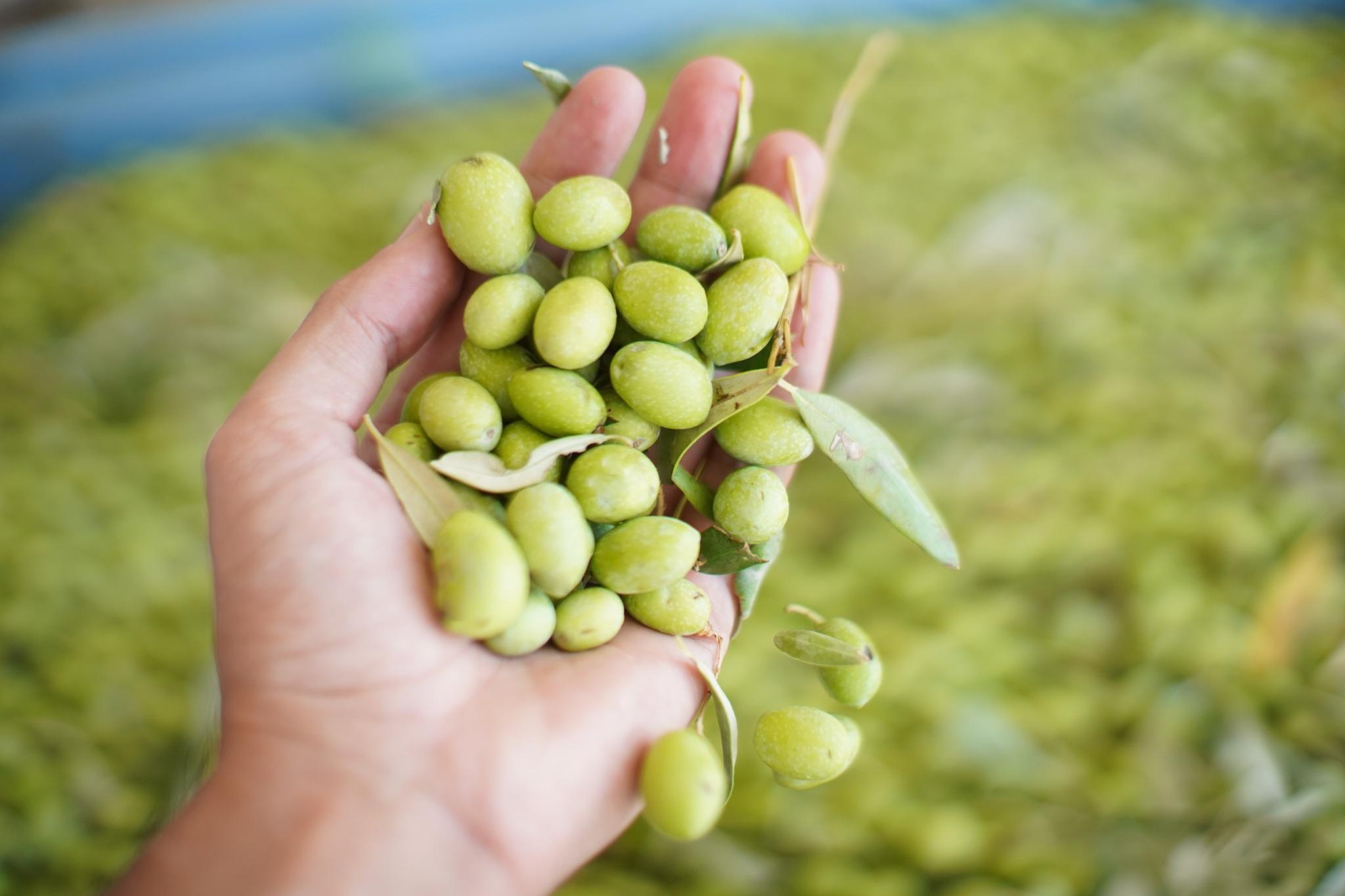
On average, 100 kg of olives yield 12 to 20 litres of oil, depending on the cultivar, the ripeness and the year. In other words, one litre takes 5 to 8 kg of olives.
Olives picked early, while still green, yield less oil, but an oil richer in aromas and polyphenols. It is a choice of quality that is paid for in quantity: anyone who harvests early gets less oil from the same grove.
2. The harvest
In hillside groves with centuries-old trees, like those of the Monti Iblei, the harvest cannot be fully mechanised: it is done by hand or with small hand-held harvesters, tree by tree. It is the heaviest cost item, and it is why a hill-grown oil can never cost the same as one produced in large intensive groves on the plains.
3. Fast milling
An olive that waits for days before being crushed loses aroma and quality. Getting the olives to the mill within a few hours of picking means planning harvest and milling day by day, without letting them pile up. Our olives for Il Distinto are milled within four hours, at our own mill on the estate. We explain why temperature at the mill matters so much in our article on temperature-controlled malaxation.
4. Certifications
PDO, PGI and organic all come with production specifications to comply with, annual inspections, laboratory analyses and tasting panels. These are costs an uncertified oil does not have, but they are also the guarantees that let you know what you are buying. We explain what each one guarantees in our guide to PDO, PGI and organic olive oil.
5. The harvest year
The olive tree alternates between heavy-crop and light-crop years, and production depends heavily on the weather: drought, frost or heat during flowering can halve the harvest. That is why the price of olive oil changes from one year to the next, for every producer.
6. The format
Glass, cap, label and packing work weigh far more on a small bottle than on a 5 litre tin. The result is that the same oil can cost twice as much per litre depending on the format.
How the format changes the price per litre: an example
Here is how the price per litre of two of our oils varies, based on our shop prices in November 2026:
| Format | Il Distinto (PDO Monti Iblei) | L'Amabile (organic, 100% Italian) |
|---|---|---|
| 250 ml bottle | €40/litre | €32/litre |
| 500 ml bottle | €32/litre | €24/litre |
| 1 litre tin | €22/litre | €18/litre |
| 3 litre tin | about €19/litre | €16/litre |
| 5 litre tin or bag-in-box | €18/litre | €15/litre |
The small bottle makes sense as a gift or to try an oil. For everyday use, the large format saves you a lot, for the very same oil.
What it really costs per serving
The price per litre is more off-putting than it should be, because a litre of oil lasts a long time. A drizzle of raw oil over a dish is about one tablespoon, 10 ml: with a PDO oil at €32/litre it costs about 30 cents; with an organic oil in a tin at €15/litre, about 15 cents.
Per plate, the difference between a mediocre oil and an excellent one comes down to a few cents. It is hard to find another ingredient that changes the flavour of a dish so much for so little money.
When a price that is too low should make you suspicious
An Italian extra virgin olive oil sold at a very low price deserves a few questions. Given how many olives it takes to make a litre and what harvesting and milling cost, there are limits below which it is hard to go without cutting corners. Check the label for:
- the origin: "blend of olive oils of European Union origin" or "not of European Union origin" means olives from several countries, not necessarily Italian;
- the category: "olive oil" (without "extra virgin") and "olive-pomace oil" are different products of lower quality;
- the harvest season: if it is not stated, you do not know how old the oil is;
- recurring below-cost offers: they often involve oils close to their best before date.
For the other signals to check on the bottle, see our guide on how to recognise a genuine extra virgin olive oil.
Is a high price enough to guarantee quality?
No. A high price is consistent with a quality oil, but it does not prove it. A beautiful bottle and an evocative name can cost as much as the oil inside. To judge, you need facts: cultivar, origin, harvest season, analysis (acidity, polyphenols, peroxides) and, in the end, your own tasting. To read the numbers without mistakes, see our guide to acidity, polyphenols and peroxides on the label.
How to spend more wisely
- Use two oils: an everyday extra virgin olive oil in a tin or bag-in-box for cooking, and a PDO oil for using raw, where aromas and flavour come through most.
- Choose the large format for the oil you use most: the price per litre drops by as much as 40-50%.
- Buy in season: freshly milled new olive oil gives you peak quality for the whole year that follows.
- Store it properly: oil spoiled by light or heat is oil paid for and wasted. We explain how in our guide on how to store extra virgin olive oil.
- Buy from the producer: fewer intermediaries means more information about the oil and a price that pays for the work of the people who make it.
In short
The price of a good extra virgin olive oil depends on the olive yield, the cost of harvesting, how quickly the olives are milled, certifications, the harvest year and the format. Per serving, it costs only a few cents more than a mediocre oil. Be wary of very low prices for an Italian oil, but do not trust a high price alone either: look at the origin, the harvest season and the analysis. And to save money, choose the right format for how you use it.
Read also
- Best Sicilian extra virgin olive oil: how to choose it online without mistakes
- PDO, PGI or organic olive oil: what is the real difference?
- How to store extra virgin olive oil (and how long it keeps)
All our oils come in bottles, in 1, 3 and 5 litre tins and in a 5 litre bag-in-box: choose the right format for you on our Sicilian extra virgin olive oil page.